
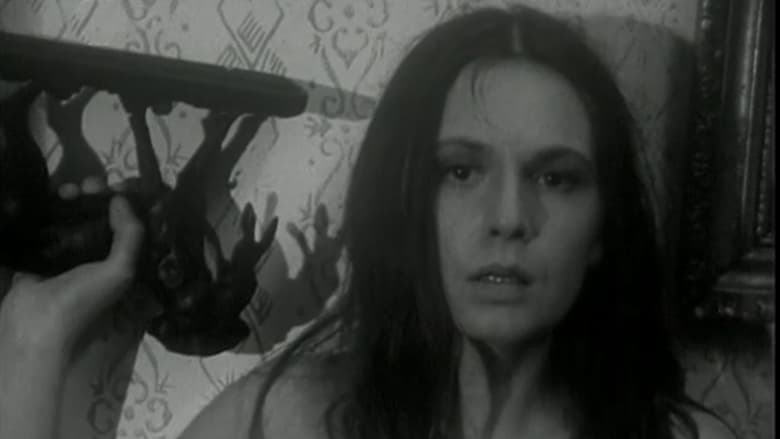
When Àron Matyassy released Vikend (2015), the tagline was Az elsö Magyar thriller (The first Hungarian thriller). That’s less of an exaggeration than it should be. However, Defekt (1977) by Lajos Fazekas is one of the very few films that can be considered a thriller or horror film made during the communist days and might be the film that could use said tagline without any exaggeration. Defekt was initially made for television but was put on hold for years. It was completed in 1982, and the final version was screened on television in 1984 and the subsequent year in cinemas, as well. The film is apparently based on a true story, which was not a sales pitch at the time.
The story is ostensibly not so complicated. Detective Gedeon (András Kern in an early role) claims that there is a connection between three cases of disappearing women and tries to convince his superior about it. Said superior is sceptical but still allows Gedeon to use a patrol car and bring a colleague with him. Simultaneously, we will follow a woman (Katalin Gyöngyössy) who gets a puncture on her car tyre and, in the pouring rain, goes to a strange house to seek refuge. The inhabitant of the building (Laszló Markus) reluctantly lets her in. Where will the story go from here? Defekt is routinely compared to Psycho (1960), but it has its own twists and turns.
A Film With No Defekt
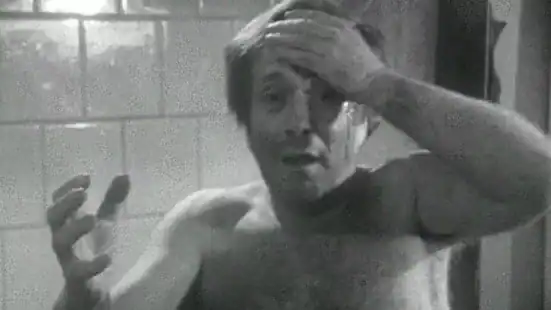
Defekt is shot in black & white and in the 4:3 format. Fazekas often worked with master cinematographer Lajos Koltai, but this film was lensed by Mihály Halász, who might be mostly known for György Szomjas’ Eastern Rosszemberek (1979). The film is beautiful to behold in its retro style, and the 70-minute runtime ensures that it never overstays its welcome. It is chilling in a manner that resembles Night of the Living Dead (1969) and other low-budget classics. It should be noted that by Hungarian standards, the budget was not low. The aforementioned true story was one that the authorities were trying to hide. Thus, there are no explicit references to the story’s location.
Defekt‘s anonymous qualities are enhanced by the fact that only two characters are mentioned by name, and even the car plates are covered. Whether this works as a way to obey the authorities’ demands of covering up the story or, rather, making the tale general or universal is up to the individual spectator. Lászlo Markus, who plays the man that the girl meets, was a confirmed horror fan and jumped at the opportunity to make the film, and he was disappointed by not being able to do more such work. Katalin Gyöngyössy later became known as one of the scriptwriters for The Revolt of Job (Jób lázadása 1983), which was nominated for an Oscar for Best Foreign Film.
A recent rewatch of Defekt confirmed that it holds up very well in its modest appearance. It doesn’t change the face of cinema but is constantly compelling throughout its brief duration.
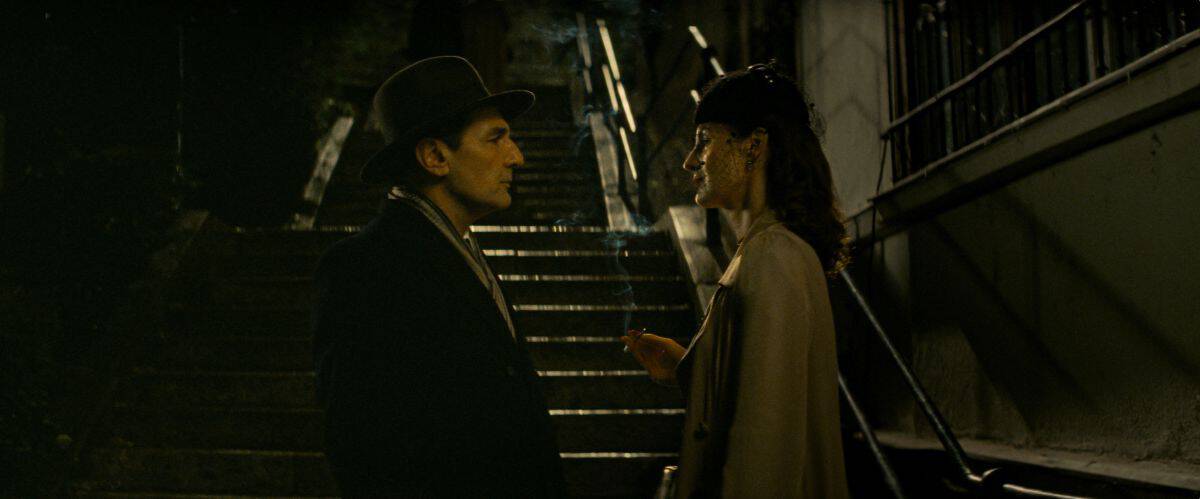


seen a rare hungarian film shot in black and white wonderfully filmed i remember a man walks alone at night i think and gets to a bridge while contemplating suicide i think you see the leaves around the bridge, wish i could find name to this rare hungarian film.
Hi Dean,
It is not an easy case since the description is quite general. Are you sure it was Hungarian? Any idea when it was released more or less. So, you are sure about the man on the bridge and that he is contemplating suicide? First you made me think of Fred Kelemen’s Krisana, but it is not Hungarian. Kelemen did work with Béla Tarr on his last two films. The Man from London takes place in a harbour, but there is no man contemplating suicide even though he is unhappy. If you remember more, please tell me. I will try to think as well.
Actually, Tarr’s earlier film Damnation could suit your description better. Not so sure about the bridge though.