The 29th Tallinn Black Nights Film Festival, or PÖFF as it is called with an untranslatable pun, is already ongoing. It is thus time to take a look at the festival 2025 selections. The Black Nights Film Festival Awards 2025 have since been announced. It began last Friday, but tomorrow marks the start of the major competitions. The fest has been described as a beacon of bold cinema in the heart of the November winter, transforming Estonia’s capital—and select venues in Tartu—into a pulsating hub of cinematic discovery. This year’s expanded program boasts 252 feature films and 275 shorts from 79 countries, including 111 world premieres and 31 international debuts. The fact that the festival appears to be expanding exponentially is not necessarily a good thing.
Amid a spotlight on Catalonia’s fierce, independent spirit—featuring over 30 films and 70 guests—PÖFF continues its legacy as Northern Europe’s premier FIAPF-accredited A-list event, blending world-class competition with industry forums like Industry@Tallinn & Baltic Event (November 14–21). With starry highlights from James McAvoy to Golshifteh Farahani, and tributes to Ukrainian youth and Lithuanian icon Juonas Budraitis, this edition mirrors our world’s anxieties—wars, migration, environmental crises—while celebrating resilience, family bonds, and unbridled creativity. I will focus on three sections: The Main Competition, Rebels With a Cause, and Critics’ Picks.
PÖFF Festival 2025 Selections – Main Competition
The Main Competition features 17 films, including 16 world premieres and one international premiere. Among the selected films, some seem more promising than others. Versalles by Mexico’s Andrés Clariond appears to be a lavish exploration of excess and decay in a crumbling estate. The programme’s description, which states that it is inspired by a Yorgos Lanthimos film, could be a cause for concern, but that remains to be seen.
The Moon is a Father of Mine, from Crystal Globe winner George Ovashvili from Georgia, delves into paternal legacies amid rural strife. Think of England, by BAFTA-nominated Richard Hawkins, is described as a satirical drama that explores the boundaries of generally accepted behaviour and how these boundaries are shifted with random pretexts in a war situation. German Thomas Stuber brings The Frog and the Water. If the title sounds like it is about the recent changes in Western Europe, it is, supposedly, a heartfelt road movie where two lonely human souls find each other.
Last year’s highlight was Silent City Driver by Mongolia’s Sengedorj Janchivdorj (PÖFF 2024 Grand Prix winner). This year, he will present The Muralist, tracing an artist’s rebellion against censorship. There are debuts as well, such as 18 Holes to Paradise by João Nuno Pinto, a surreal golf-course odyssey through grief, and Iran’s Duality by Abbas Nezamdoost, which unpacks the complexities of split identities in a divided society. Hungary’s Hungarian Wedding by Csaba Káel captures cultural rituals teetering on the brink of collapse, and LifeLike by Ali Vatansever examines AI’s eerie intrusion into intimacy.
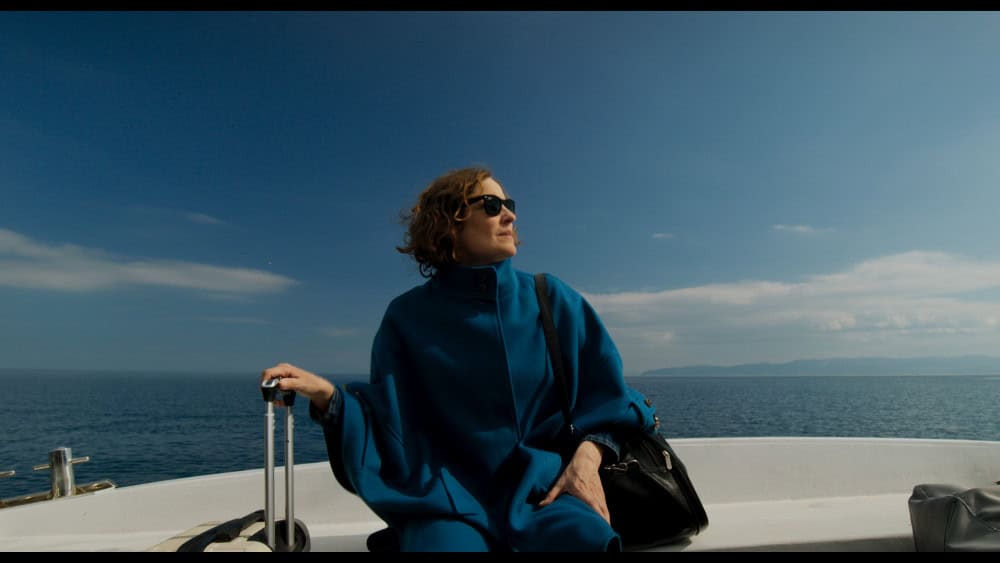
Rebels With a Cause, launched in 2017 and curated by Javier Garcia Puerto, is typically the most rewarding section of the festival. The festival claims that it presents “daring cinema and fearless storytelling through untraditional expressions, innovative narratives, and bold aesthetic experiments”, and for once, these are not merely buzzwords. This ninth edition features a mix of full features, challenging viewers to rethink film’s boundaries: symbiotic art forms, technical wizardry, and dramaturgy that defies linearity. Judged by Iranian director Ali Asgari, British critic Rogan Graham, and Spanish producer Alicia Reginato, the section awards Best Film (shared by director and producer), and Best Director, spotlighting works that fuse genres or wield form as a weapon.
Infusing star power, Jamie Adams’ Turn Up the Sun! (presented Out of Competition) stars James McAvoy in a raw, introspective directorial debut blending music and memory in a sun-soaked Welsh reckoning. Romanian Adrian Sitaru, with the brilliant debut Pescuit sportiv (2008), presents Blindsight, which appears to continue the play with perspectives present there. Greece’s Spiros Stathoulopoulos, who also made a notable first feature, PVC-1 (2007), now presents The Megalomaniacs. Even if the title makes it sound like it is about the heads of a festival in a once glamorous French town, the setting seems to be elsewhere.
The programme asks the question, “What happens when desire, intellect, and ego collide under the guise of art and science?” We’re about to find out. The film stars Angeliki Papoulia, who, in my opinion, has never been in a good film, but maybe it’s time now? The Belgian film The Baronesses depicts four grandmas who decide to perform Hamlet in Molenbeek, Brussels. The film has been described as “combining comedy, drama, surrealism and a touch of absurdity with plenty of creative freedom”. Even though the description rattles all my disapproving cages, I will still take a look.
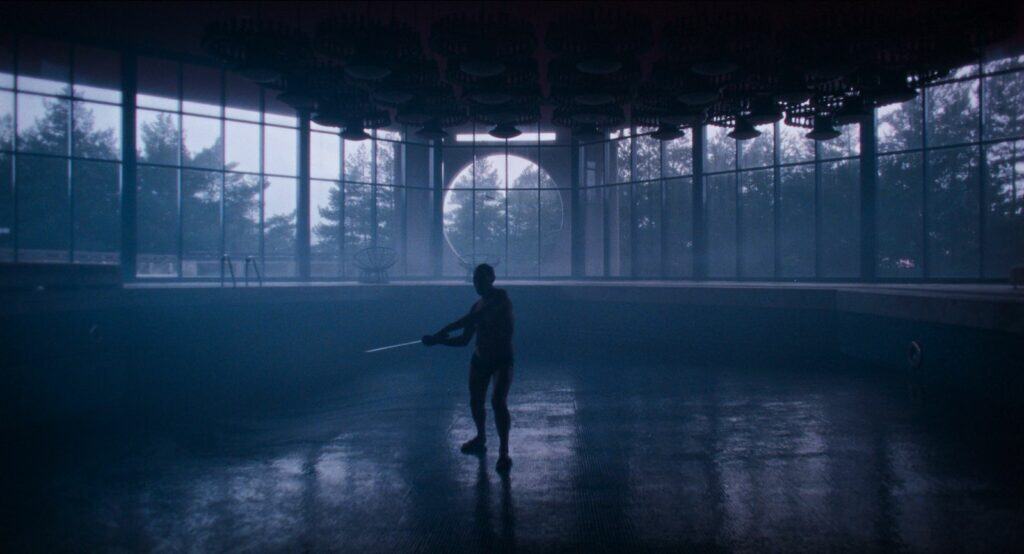
The Critics’ Picks section last year was marred by an intentional goal by the curator to avoid “boring arthouse films”. Still, the section featured one of the best films of the year, Dechen Roder’s I, the Song. The director is back this year, but in a juror capacity. Lithuania’s Jurgis Matulevičius follows his Isaac acclaim with China Sea, about a cancelled martial artist who finds refuge in a Taiwanese family’s restaurant. The film boasts a script by Saulė Bliuvaitė, whose directorial debut, Toxic, inexplicably won The Golden Leopard at Locarno last year.
Eeva Mägi’s Mo Papa is the follow-up to her overrated Mo Mama, presented in the 2023 edition of Black Nights. Insiders have told me that the new work is more accomplished. Laurent Micheli’s Nino in Paradise is, supposedly, a gritty and raw depiction of the titular character (Oscar Högström), who tries to disappear into the French Foreign Legion. Back in Paris, he reunites with his ride-or-die crew: girlfriend Lale and his best friends, Malik and Charlie. A Summer Tale by Matías Szulanski revolves around hustler Jorge, who, after a heart attack, wants to prove that he is a good buy, whatever that means.
The Canadian Invisibles by Junna Chif is about an escort who questions her life until a client with a disability makes her confront who she is and who she might become. It is yet another first feature. The Iranian Oh, What Happy Days, bolstered by Golshifteh Farahani’s presence, aims to reflect on Iran’s past and present.
Even though it was far from obvious, the Black Nights Film Festival will enjoy a Disapproving presence for the fifth consecutive year. Anything else would be weird after last year’s extensive coverage, which included 32 pieces across three outlets and two languages. Still, readers who have been following my reviews and interviews for the past four years may notice a slight difference in the tone of this year’s coverage.