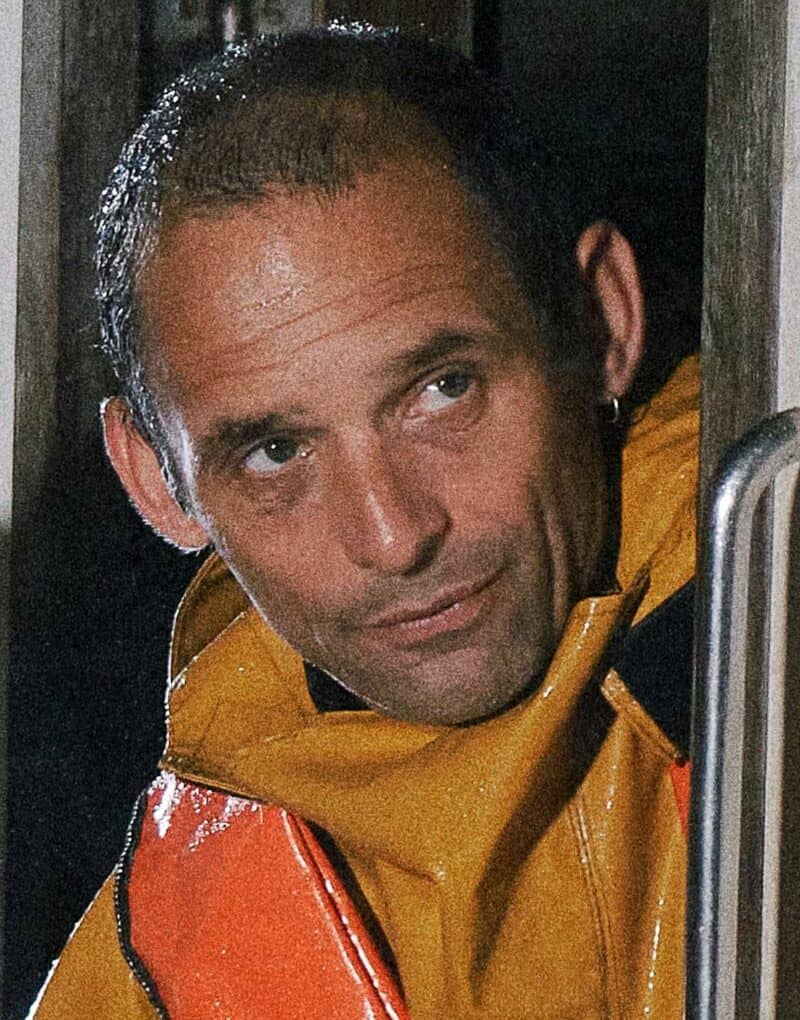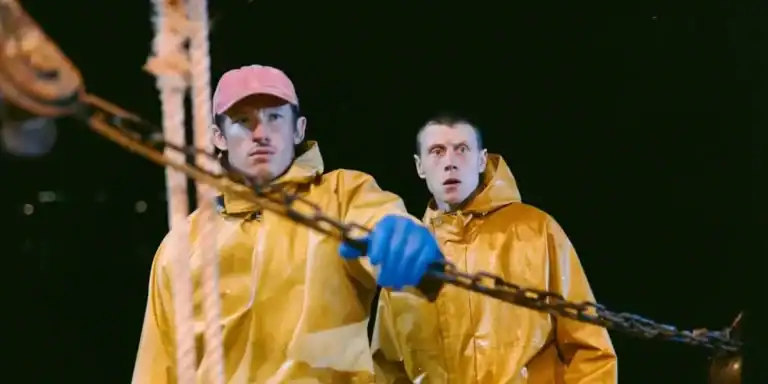
Rose of Nevada is Mark Jenkin’s third feature, following Bait (2019) and Enys Men (2022). It premiered in the Orizzonti section of this year’s Venice Film Festival. On the surface, the storyline is easier to explain than the previous films. In a forgotten, devastated fishing village in Cornwall, a boat mysteriously appears in the old harbour. The Rose of Nevada, lost at sea with all hands 30 years ago, has returned. For the few who remember, it’s a sign. The boat must go out to sea again, possibly restoring the ravaged village’s fortune in the process. Nick (George MacKay) joins the boat’s crew to support his young family, while newcomer Liam (Callum Turner) signs on to flee his past.
After a fruitful voyage, they return to harbour, but something’s wrong—they’ve slipped back in time, and the villagers greet them as the original crew. It is 1993, three years before Nick’s birth. Still, everyone in the village treats Nick and Liam as the original crew. Nick is visibly distressed, while Liam seems to enjoy the new situation and happily settles in with the woman who thinks her husband is back. This version of the village they’ve returned to is livelier and in far better shape than the one they left.
All Hands on Deck
The expression “lost at sea with all hands” is interesting in many regards. The storyline depicts the gruelling work done by hand on the fishing boat that the village relies on. A fact evident in the way Jenkins shoots those scenes. In cinematic terms, hands have always been essential to the director, something he shares with Robert Bresson, whom he often mentions as an influence. One scene with handcuffs in Bait was reminiscent of the French director, as are several early scenes in Rose of Nevada. By contrast, Bresson rarely played with time, whereas Jenkin does, not only on the narrative level but also in a more granular way in certain scenes. There are numerous surprises which I won’t spoil.
Never Mind the Bolex, Here’s Mark Jenkin
To continue my hands-on approach, I concluded in my review of Bait that it is a handwritten love letter to cinema. Among other things, it referred to Jenkins’s use of the Bolex camera. The director shot the film, operating the camera himself. The same camera has been used since then. The major difference compared to the earlier film is the two “name” actors in the leading roles. When I interviewed Jenkin, he told me that he initially thought he would have to hide how he works, but quickly realised that MacKay and Turner were there for a different experience.
When I learned about the two big names starring in the new project, I became worried, but they both excel in their roles and blend seamlessly with the rest of the cast and the environment. The latter is essential, since the concept of community is central to the film, which would have collapsed like a broken roof without Turner’s and McKay’s unshowy performances. Like Enys Men, the film is in colour, and the colours are highly pronounced. Red is the predominant colour, and Jenkin said that he wanted everything red to pop. The combination of yellow and blue is also striking.
Rose of Nevada – Back to the Future
One aspect of this time-leaping adventure touches on a paradox similar to one in the Michael J. Fox film. I will not go into details, but rather discuss the concept from a cinematic standpoint. During the last decades, watching classics at film festivals has been a peculiar experience. Not only are the older films superior in quality, but they also often feel more modern and formally audacious. That applies to films that were not necessarily considered formally groundbreaking upon their release. Sidney Lumet’s commercially successful Murder on the Orient Express is merely one example. The Rose of Nevada, with its archaic stylistic methods, manages to feel both classical and modern at once, remaining constantly vibrant, particularly through the images’ textures.
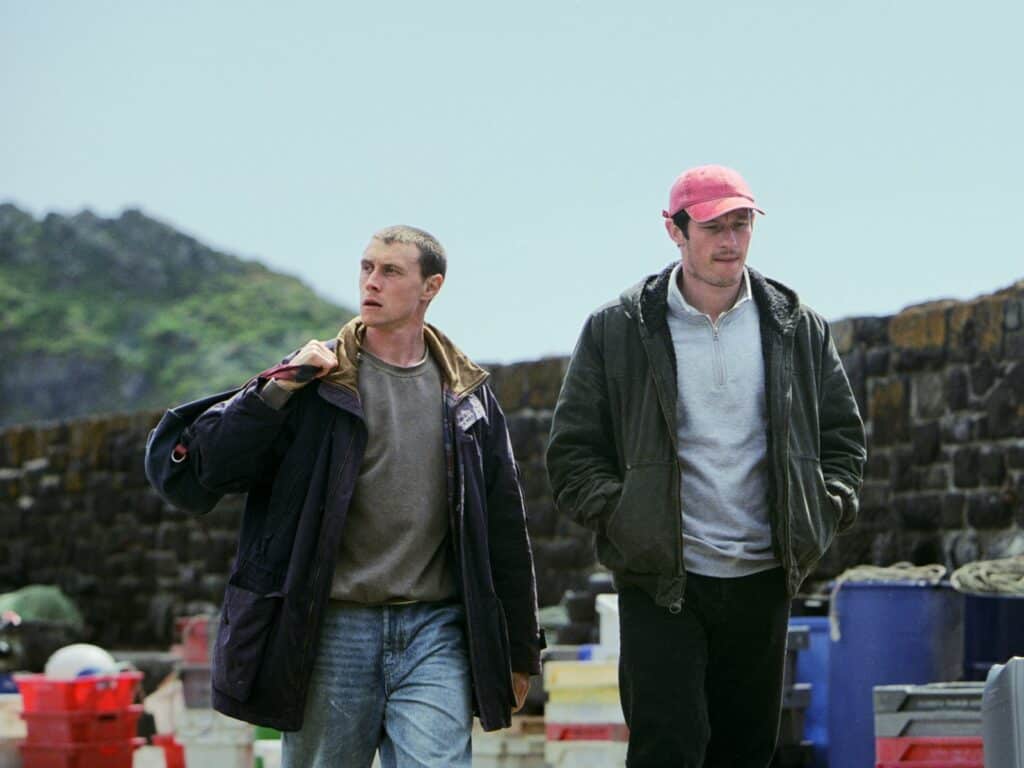
When Nick and Liam choose to go out to sea with Rose of Nevada, they are led by a rough captain (Francis Magee). When they fail to gut the fish correctly, he shouts, “Head to asshole”. That straightforward approach is relevant to manual labour, but ever so often, the attitude among film critics is all too similar. While some of us enter a cinema hoping to be astounded by sounds and images that create an engrossing cinematic form, others are merely looking for a narrative as linear as gutting a fish. It was evident from the reception of Reflection in a Dead Diamond at the Berlinale, and some reviews lamented the narrative in Jenkins’s film as well.
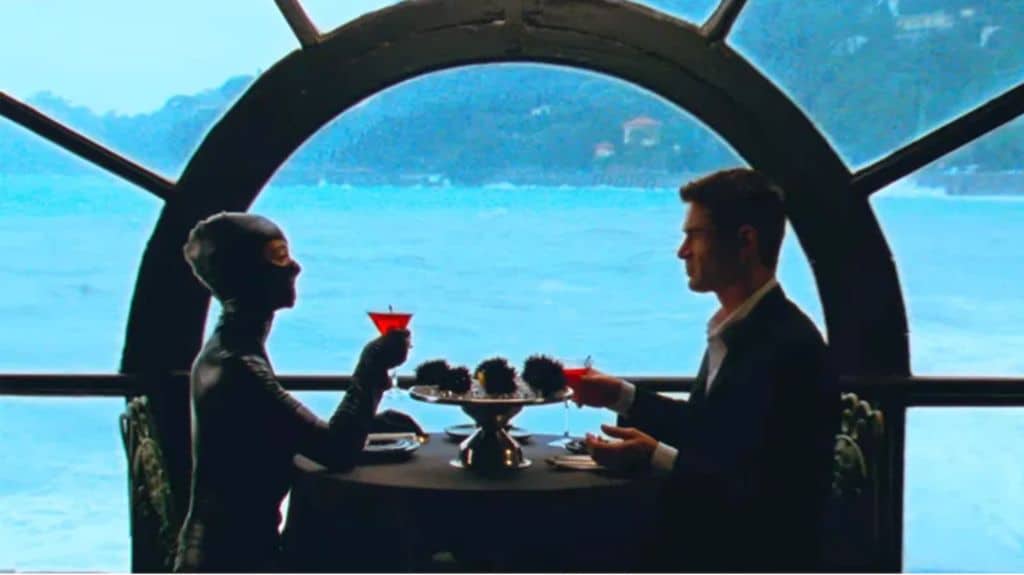
For the rest of us, Rose of Nevada is not only the best film at this year’s Venice Film Festival, but one of the most exhilarating cinematic experiences of the year. At a festival that screened numerous Netflix films with the same teal and orange grade, or the same symmetrical drone shot, using the same cinematic LUT pack, to quote Jeremy Curl, Rose of Nevada felt like finding water in a desert. Even though his three features were shot in the same way, Mark Jenkin manages to bring something fresh and vital to his tried-and-tested formula. When he said in my interview with him that he follows his gut, it is nowhere near as straightforward and trite as fish guts.
At the risk of offending Jenkin’s fans, and even the director himself, I wonder where he will go from here. During the interview, we discussed McKay’s brilliance in Bertrand Bonello’s film, The Beast (2023). Jenkin mentioned the actor’s use of an iPhone to film himself. Though it might sound weird or even blasphemous, I wouldn’t mind a future Mark Jenkin film shot with a hand-held iPhone. I am convinced that he would also be able to find new formal strategies with such a device.