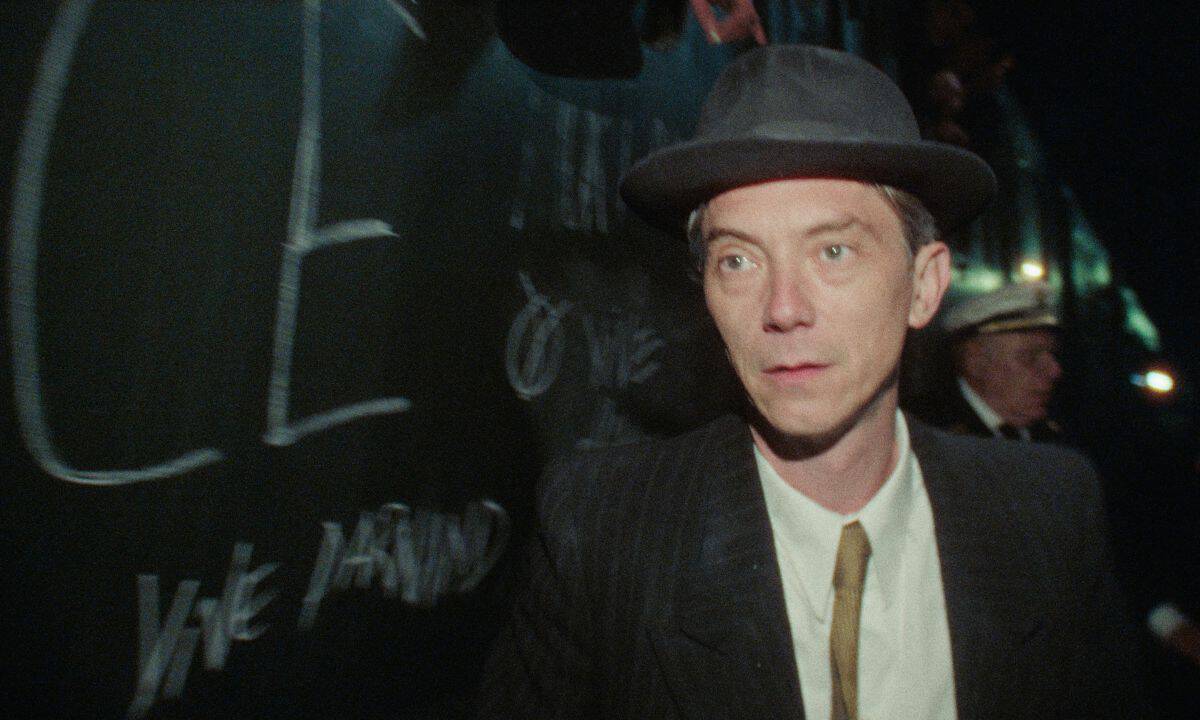
Priceless was the English title of Salvadori’s last hit. Twenty years on, neither word applies. ★½☆☆☆
The 79th Cannes Film Festival opened with yet another French film, The Electric Venus by Pierre Salvadori. At The Disapproving Swede’s headquarters, it’s well known that the Cannes opener is rarely great and often mediocre. Would the 2026 opener be an exception? Pierre Salvadori is best known for Hors de prix, starring Audrey Tautou, from 2006. The English-language title was Priceless, which raised the question of whether it would be an apt description of the comedy in the new film.
The film is set in Paris in 1928. Suzanne (Anaïs Demoustier), a down-on-her-luck carnival performer billed as “La Vénus Electrificata,” makes her living in a humiliating sideshow: men pay to kiss her and receive a jolting electric shock, all in the name of feeling the “electricity of love.” One night, while attempting to steal from her clairvoyant neighbour, Suzanne is mistaken for the psychic by Antoine (Pio Marmaï), a grieving painter desperate to reach his deceased wife. Reluctant but unable to refuse the money, she delivers a surprisingly moving séance that stirs something profound in him.
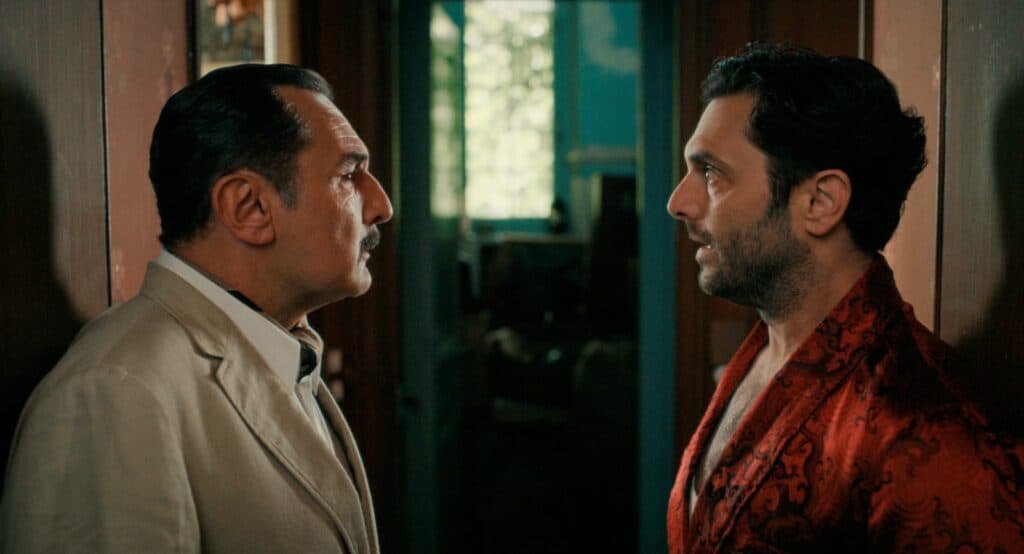
Antoine soon invites her to his elegant villa for another session, paying handsomely. As Suzanne leaves, she is intercepted by Antoine’s agent, Armand (Gilles Lellouche), who has seen through her deception. He angrily confronts her for preying on his friend’s pain—until he notices Antoine, newly inspired, has begun painting again. Sensing an opportunity, Armand proposes they maintain the ruse, offering Suzanne a cut of the profits. She begins returning regularly, secretly poring over the late wife’s diaries to keep the illusion alive. Yet as genuine affection grows between Suzanne and Antoine, the boundary between performance and real emotion starts to dissolve, putting everything at risk.
The major charge against The Electric Venus

The setup rings a bell or two, and it’s not far-fetched to think of Ernst Lubitsch while watching this film’s attempt to toy with reality and illusion. Trouble in Paradise (1932) comes to mind more than once, but my mind also wandered to Alain Resnais’ delicate comedy, Pas sur la bouche from 2003, with the aforementioned Tautou. It might be unfair to compare with two of the most consummate masters of the cinematic art. Still, both directors are reminders of the precision needed for this kind of work to feel funny, amusing, or refreshing. The famous “Lubitsch touch” was a term used to describe the outcome of his endeavours, but it obscures all the work that goes into achieving it.
The Electric Venus offers virtually no surprises, and the constant allusions to bringing someone to life with electricity merely underscore that this film arrived DOA. The carnival environment is akin to Nightmare Alley. Readers might recall that my reactions to Guillermo del Toro’s clumsy remake were far from charitable. However, I would rather rewatch that version than this tepid attempt at comedy, which also pretends to offer a life lesson. The thespians do what they can, but the heavy-handed material short-circuits any attempt to bring a spark to the dull proceedings. Vimala Pons comes out the best as Irène.
The film mostly looks handsome in a non-alluring way, with a colour scheme that could have been achieved by prompting the AI tool of your choice to conceive a broad family film. I was considering leaving the cinema, but I was curious how it would end. I do not refer to the plot, but I had a suspicion about the end credits. When the film ends with the most obvious song imaginable, it’s a clear sign of how utterly unoriginal The Electric Venus is. Maybe that’s why I haven’t used the film’s original title, La Vénus électrique, throughout this review.
.