Emmanuel Marre’s Notre salut has a genuinely unsettling premise about ordinary complicity, but curdles into two and a half hours of bureaucratic tedium that mistakes accumulation for depth. ★★☆☆☆
Seen at its world premiere in the Cannes Film Festival Competition, Emmanuel Marre’s second feature, Notre Salut (A Man of His Time), arrives with a premise that should carry considerable weight: a fictionalised account of the director’s own great-grandfather, a failed engineer who smooth-talks his way into the Vichy bureaucracy in September 1940. The raw material has potential and is genuinely unsettling, not because Henri Marre is a monster, but because he isn’t. He is a mediocre man with a grandiose self-conception and limited talent, who, in the new order, sees not an ideology he believes in, but a ladder he can climb. That is a far more troubling portrait than any depiction of fanaticism.
The tragedy of Vichy, after all, was not that it was built by true believers alone, but that it was sustained by men like Henri: opportunists and self-deceivers. The problem is that Marre, the filmmaker, never quite decides what to do with Marre, the great-grandfather. At 155 minutes, the film is predominantly men talking in closed rooms. A format that has produced some of cinema’s greatest work, but one that demands an accumulation of pressure, a sense that each conversation is tightening the screws. Here, the conversations accumulate without building. The bureaucratic rhythms, presumably meant to evoke the banality of collaboration, instead become an embodiment of banality and tediousness.
Notre Salut? J’en ai Marre et rien à foutre
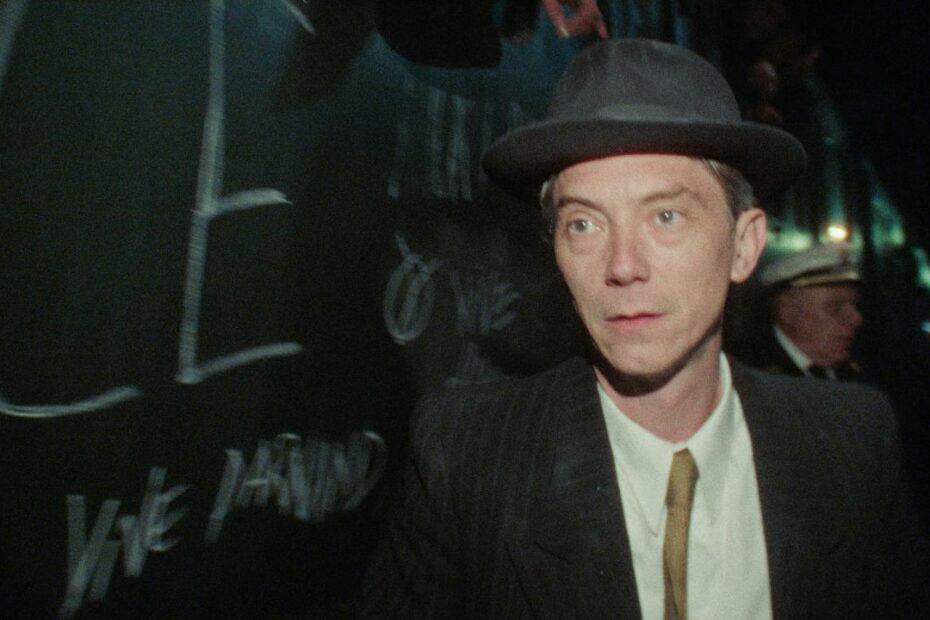
Swann Arlaud, who in recent years has established a reputation as one of French cinema’s most quietly compelling presences,1 At least for those who found Anatomie d’une chute watchable.does what he can with Henri. His sad eyes and hesitant manner suggest a man perpetually convincing himself that what he is doing is reasonable, even admirable. However, the film never finds a perspective on its subject that would make Henri’s ordinariness interesting. We watch him manoeuvre, prevaricate, and self-justify, but to little effect. The script, based on letters exchanged between the director’s great-grandparents, seems so committed to faithfulness to the source material that it forgets to transform it into drama.
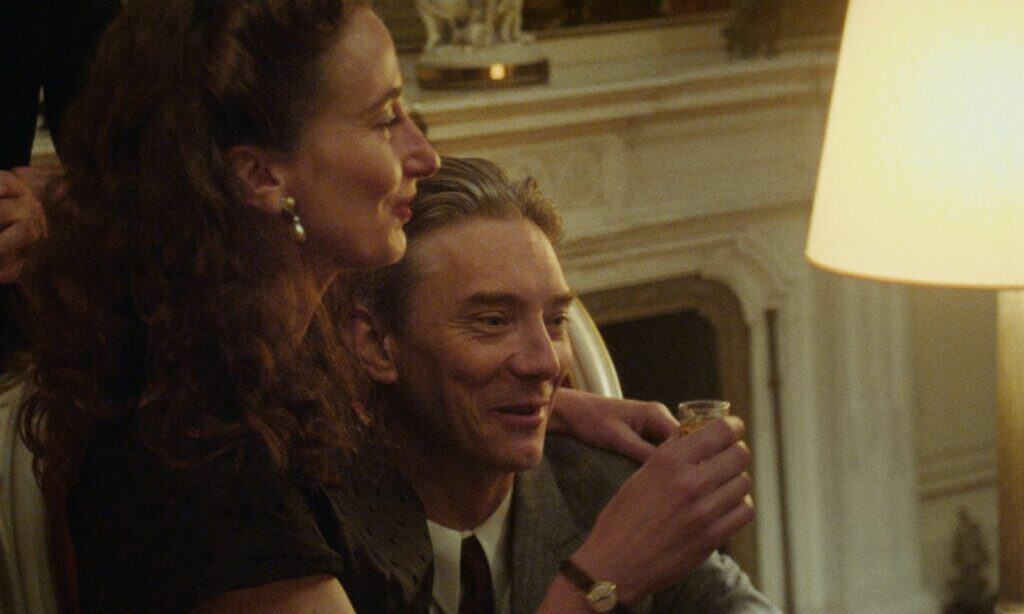
Sandrine Blancke, as Henri’s wife Paulette, gets the film’s clearest emotional throughline as a woman who watches her husband’s moral collapse with growing lucidity and dwindling patience. She is quietly devastating in a role that the film, unfortunately, keeps pushing to the margins, as if the more interesting perspective on Henri’s story were somehow beside the point.
The cinematography offers no compensating pleasures. Olivier Boonjing’s images are competent but largely anonymous, content to document proceedings in the actual Vichy administrative locations where filming took place, a decision that clearly cost something in terms of production logistics but yields surprisingly little in terms of atmosphere. The rooms look like rooms. The corridors look like corridors. One keeps waiting for the camera to find an angle that reframes the material, that makes the visual grammar do some of the interpretive work. It never does.
The anachronistic music cues, the film’s most discussed formal gesture, arrive like elbows in the ribs. The intention is presumably to jolt the audience out of period-drama comfort, to remind us that the ideological currents running through Vichy France did not politely expire in 1944. First of all, that idea is hardly new and has been repeated ad nauseam by people who don’t know what fascism is. In Notre salut, the idea never rises above gimmick level, a shortcut that signals irony the film hasn’t earned through its drama, and doesn’t need, given that the subject matter provides all the discomfort that is required. That kind of stylistic choice requires a far more accomplished director than Marre.
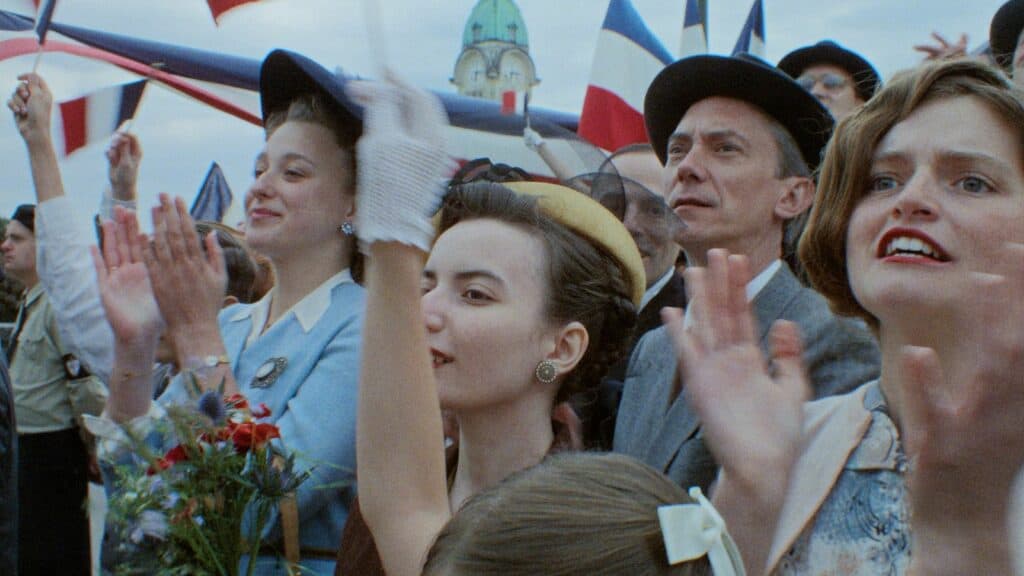
Marre is clearly sincere about this material, which is precisely what makes the film’s failure to ignite all the more frustrating. The Vichy period does not lack for cinematic treatment, from The Sorrow and the Pity to Au Revoir les Enfants; it has generated some of France’s most searching self-examination, and Marre’s instinct to approach it through the mundane rather than the dramatic is the right one. Good intentions, however, do not a compelling film make, and at its considerable length, A Man of His Time mistakes earnestness for rigour, accumulation for depth. The subject deserved a sharper film. Maybe Swann Arlaud did as well. This is yet another film that confirms the deep crisis that plagues contemporary French cinema.
Notre salut won the award for Best Screenplay, which may sound like a weird decision, but the competition was extremely weak this year. At least Marre’s film had more substance than the disastrous film that won the same award two years ago.