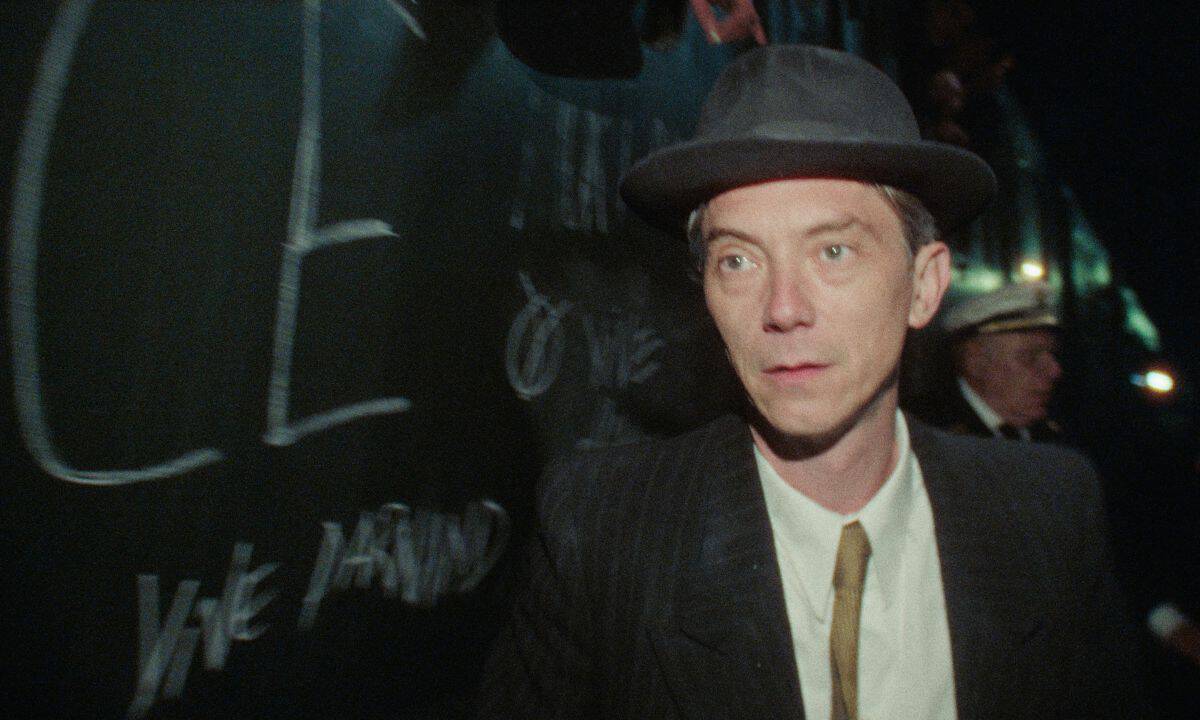
All of a Sudden is the film Hamaguchi needed to make after Venice: proof that his instincts remain intact, even if his discipline occasionally does not. ★★★☆☆
Ryusuke Hamaguchi’s All of a Sudden (Soudain) premiered on the third day of the Cannes competition. The premise is drawn from a book of letters exchanged between Makiko Miyano and Maho Isono. The former was a philosopher facing terminal cancer, and the latter, a medical anthropologist. Hamaguchi, working with co-writer Léa Le Dimna, has transposed the story to the suburbs of Paris, where Marie-Lou (Virginie Efira) runs a care facility for the elderly. She has implemented an expensive new approach to care called “Humanitude,” which emphasises personalised attention for each client. The method requires lengthy staff training and strict adherence to a common protocol. Recent discontent among the nursing team, who find it overly burdensome, may jeopardise her position.
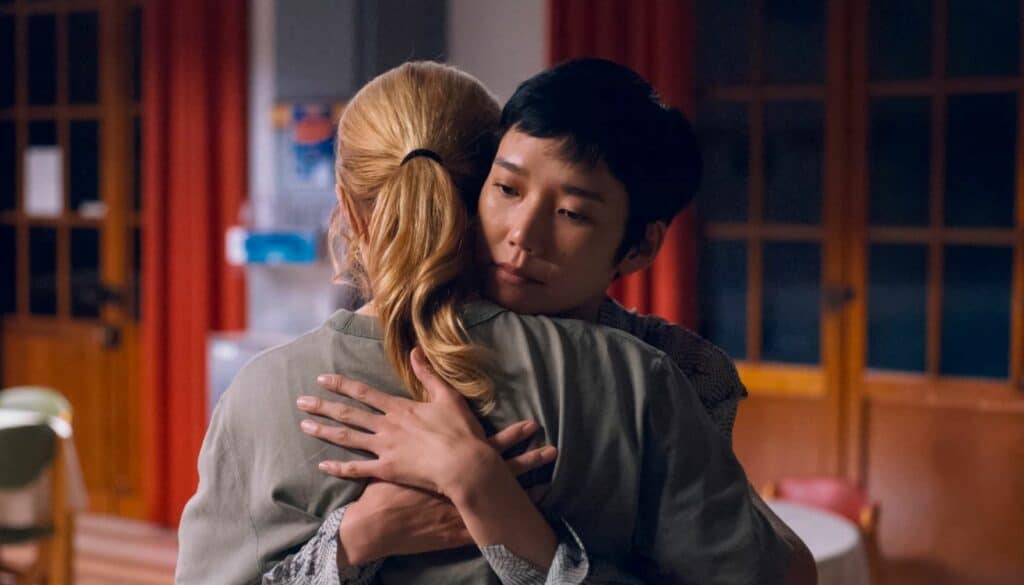
The irritation among the staff is understandable, since it seems that the people behind the method, regardless of how well-meaning it might be, do not take into account the practical problems involved, which largely fall on the staff. It is also expensive. One day, Marie-Lou happens to meet Mari (Tao Okamoto), a Japanese theatre director diagnosed with a terminal illness. The film traces their friendship across its full, unhurried arc (196 minutes)
All of a Sudden is anything but
That runtime is not entirely justified. There are passages where Hamaguchi’s characteristic patience gets stuck in chunks of bland dialogue scenes. The tendency is not as dire as in Evil Does Not Exist, which quitely collapsed under a pile of mundane communal meetings. Still, the running time would have benefited from some trimming. There are several strong, even sublime moments in All of a Sudden, but they are surrounded by too many pedestrian scenes that add little besides increasing the runtime. The humanity explored turns a tad too sweet. Hamaguchi allows his affection for these two women to soften edges that could have been left sharp.
What saves the film from its own tenderness, and saves it decisively, are its two leads. Efira, who prepared for the role by learning Japanese, once again confirms that she is one of the major actresses of her generation. Her performance renders Marie-Lou a kind of unglamorous, unselfconscious attentiveness: a woman for whom care is not a posture but a professional and moral reflex. Okamoto is her equal and, in many ways, her counterweight, projecting intellectual authority and physical fragility simultaneously without allowing either to overwhelm the other.
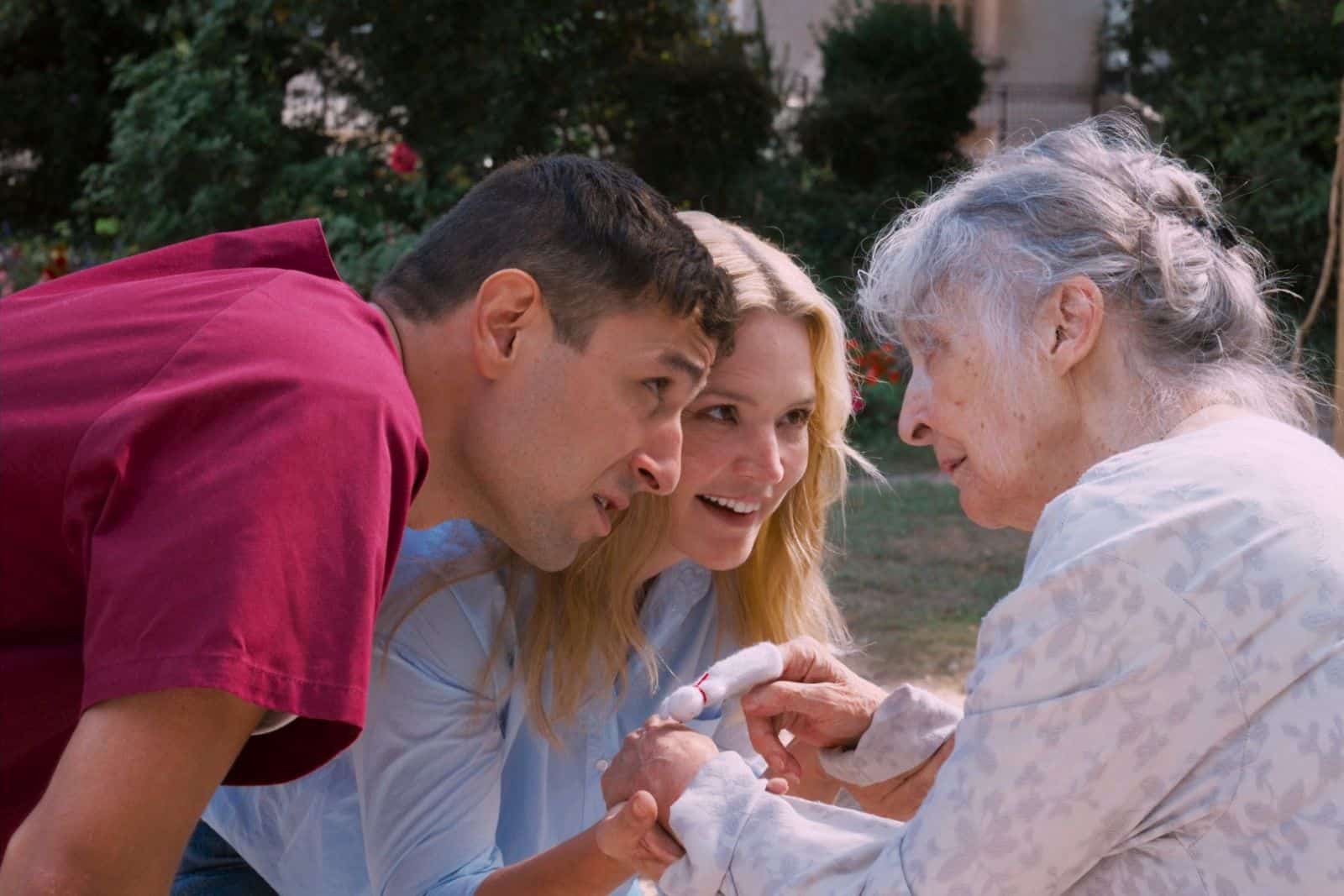
Together they generate a screen rapport that feels genuinely discovered rather than constructed, each performance modifying and illuminating the other in ways that accumulate slowly and then, in the film’s best scenes, become almost unbearably precise. That they shared the Best Actress prize at Cannes was to be expected. Despite the title, nothing happens suddenly in Hamaguchi’s universe. Whenever the two are not on screen together, the film loses its grip.
The contrast with Charline Bourgois-Tacquet’s La vie d’une femme is striking. That film placed two women at its centre and managed to know nothing about either of them, reducing their relationship to pawns for the director’s desire to impose a gay tryst between the two, in lieu of any real curiosity about who these people were. Hamaguchi has no such problem. Marie-Lou and Mari are constituted as fully separate beings before they are constituted as a pair, and the film earns the emotional weight it places on their bond precisely because it has done the slower, less glamorous work of establishing two distinct interiorities.
Cinematographer Alan Guichaoua shoots the care facility and its surroundings without sentimentality. This is not Paris as spectacle but Paris as periphery: corridor light, kitchen routines, tired gardens. The visual logic of the film is one of sustained attention, the camera holding on faces slightly longer than convention allows, as though looking, steadily and without agenda, were itself a form of care. Occasionally, the cinematography feels unobtrusive to a fault, preventing the film from reaching its true potential.
All of a Sudden is considerably stronger than Evil Does Not Exist, the Venice entry in which Hamaguchi appeared to be assembling the components of his style without the animating intelligence that makes that style worth watching. Whether it reaches the heights of Drive My Car is another matter: it does not. The earlier film had a formal rigour that gave its emotional accumulations somewhere to land. The theatre setting provided an environment in which the lengthy dialogue scenes served a purpose. All of a Sudden is more diffuse, more openly sentimental, and occasionally content to be moving where it might have burrowed deeper.