Harari’s body-swap folly wastes Léa Seydoux and 137 minutes in roughly equal measure. ★★☆☆☆
Arthur Harari’s The Unknown (L’Inconnue) arrives in the Cannes competition trailing a certain dynastic logic: his wife, Justine Triet, won the Palme d’Or here two years ago with Anatomie d’une chute, a film whose reputation has not improved on reflection. One might have hoped the household’s second competition slot would offer a corrective. It does not. The premise has genuine potential, which makes its squandering all the more dispiriting. David Zimmerman, a reclusive events photographer around forty, attends a party, follows a woman, sleeps with her, and wakes up inside her body: Léa Seydoux’s body, to be precise, since Harari has cast one of French cinema’s most recognisable faces in the role of the vessel.
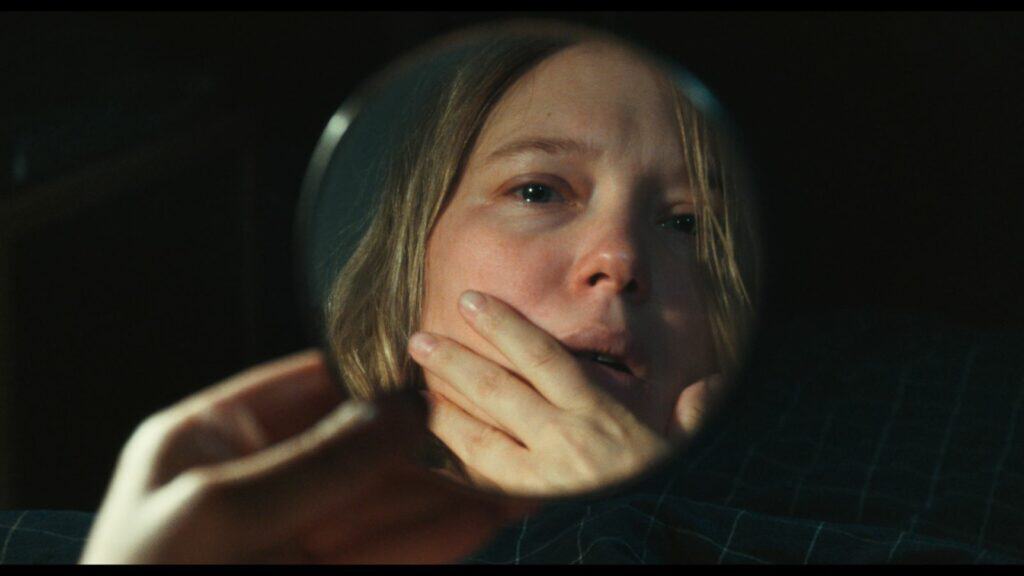
The morning-after scene establishes the premise early: David-as-Seydoux examines “his” body in a mirror at length, naked. Seydoux, who seemingly stepped back from nude scenes some years ago, appears nude in both her competition films this year. This info is mostly provided since I received a question in my Sentimental Value review last year, whether Elle Fanning had any nude scenes. Body-swap films largely depend on how the filmmaker handles the conceit. Harari essentially does nothing. The gender implications of a man inhabiting a woman’s body, the disorientation, the social texture, the altered relation to space and danger and desire, are gestured at and then set aside. The most comic effect is complaints from critics, desperately scrambling for a trans-angle.
What Harari seems more interested in is a vaguely paranoid atmosphere borrowed from what Mark Kermode lovingly refers to as elevated horror: the drifting unease, the sense of a world slightly wrong, the film proceeding as though its formal deliberateness were itself an argument. It is not. It Follows the arthouse-horror crossover, which panders to people not seriously interested in arthouse cinema, has become a major plague in recent festival competitions. Another egregious example of a competition genre film, vaguely masquerading as something else, was Hope.
The Unknown is all too well known
The mythology complicates itself without deepening. The swap is not binary; David eventually locates his own body to find it inhabited by Malia (Lilith Grasmug), a lonely young girl whose sister is getting married and whose Marcus Aurelius-quoting father is played by Romanian director Radu Jude for some reason. The main point for Malia’s character seems to be to serve as a counterpoint to what David goes through. The script has the feel of a first or second draft: the architecture is there, the ideas are sketched in, but the work of following the implications through to something intriguing has not been done. Once again, one has to wonder what happened to script doctors.
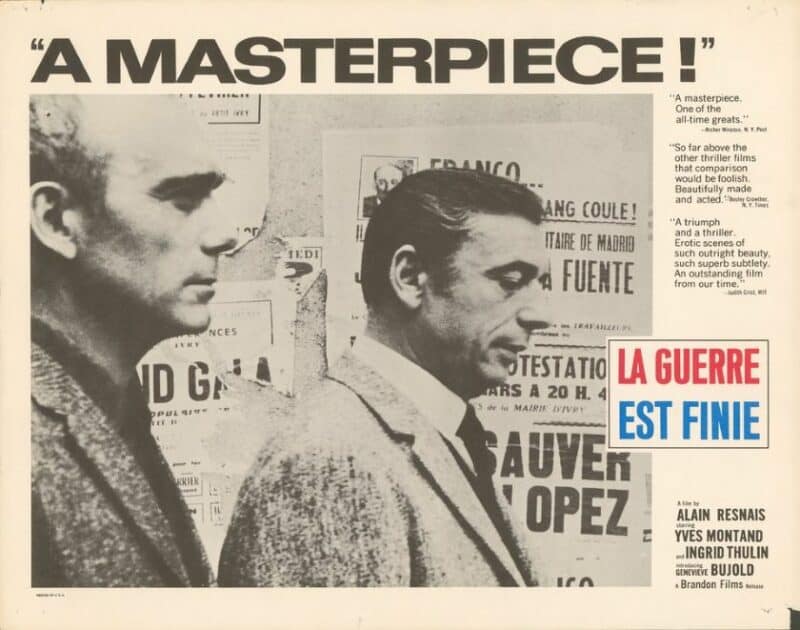
The cinematography is functional and anonymous, though Harari reaches for what is by now the most reflexively cited film in arthouse cinema more than once, visually and with apparent intent, even if the director has only alluded to it indirectly in interviews. Two years ago, the aforementioned reference was used in a way which these pages described as “a cinematic reference that might be one of the least earned that I’ve ever witnessed.” Last year’s competition had its own iteration, referring to the film, and now Harari resurrected the practise. It has become a Cannes habit: the citation as a shortcut to depth, but it’s not as becoming as those directors seem to imagine.
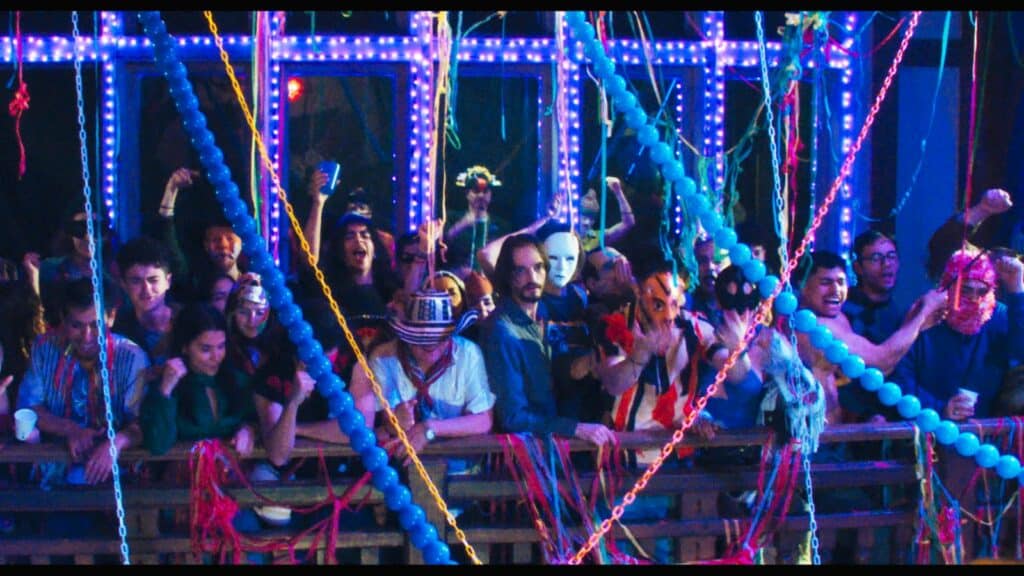
There are other effects, among them Seydoux making out with herself, including a kiss, that suggest Harari is not entirely unaware that the material could be played for something other than solemn ambiguity. Still, these moments remain isolated rather than symptomatic of a coherent visual strategy. The film runs 139 minutes, roughly 90 more than the material warrants, and feels considerably longer than that. The title L’Inconnue might as well refer to the seemingly unknown ability to produce French films of any quality whatsoever. The source material for the film was a graphic novel, written by….the director himself, aided by his brother Lucas.
What rescues The Unknown from being entirely without merit is Seydoux herself, who brings more interiority to David-inhabiting-her-body than the scenario has any right to expect, much as she did in Gentle Monster earlier in the same competition. She is, at this point, doing more to redeem underwritten French arthouse than any single performer should reasonably be asked to do. The film’s fractured relationship with subtlety is further illuminated by its end credits, which feature another Zimmerman, through the song, “It’s All Over Now Baby Blue.” At least by that point, the spectator can take the title literally, sigh in relief, and head for the exit.