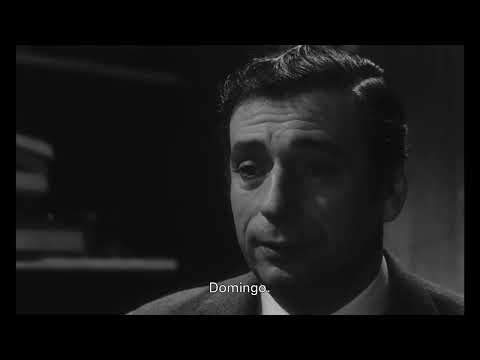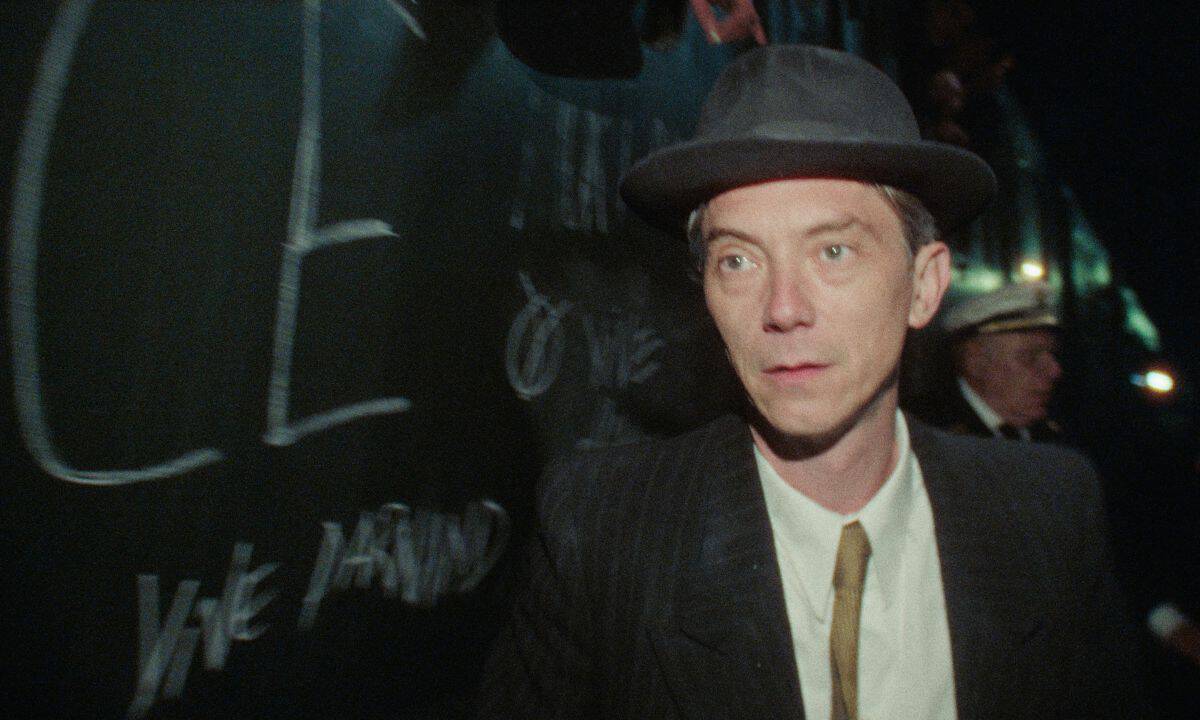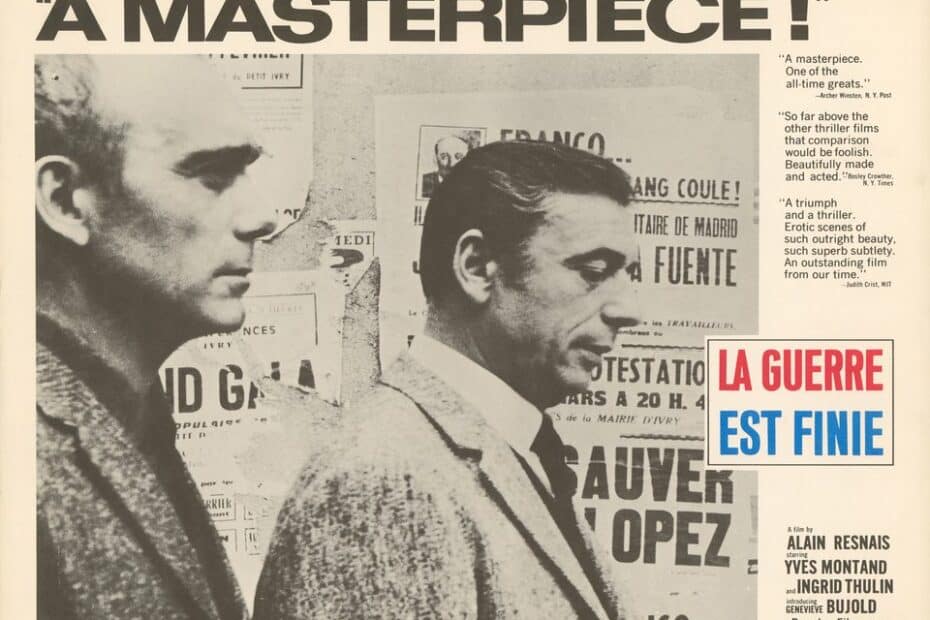
La guerre est finie (The War is Over 1966) is Alain Resnais’s fourth feature, which premiered at the Cannes Film Festival out of competition. After the commercial failure of Muriel ou le temps d’un retour, the director chose a decisively different route for his next film. Not only was the leading actor, Yves Montand, a major star, but Ingrid Thulin also brought star power to the film. The latter’s presence secured Swedish financing, courtesy of Europa Film, and thus the film joined the list of French-Swedish co-productions at the time. Another significant difference from the previous films was the scriptwriter, Jorge Semprún. This was his first film script, but he would later provide scenarios for Costa-Gavras’s films, notably Z (1969).
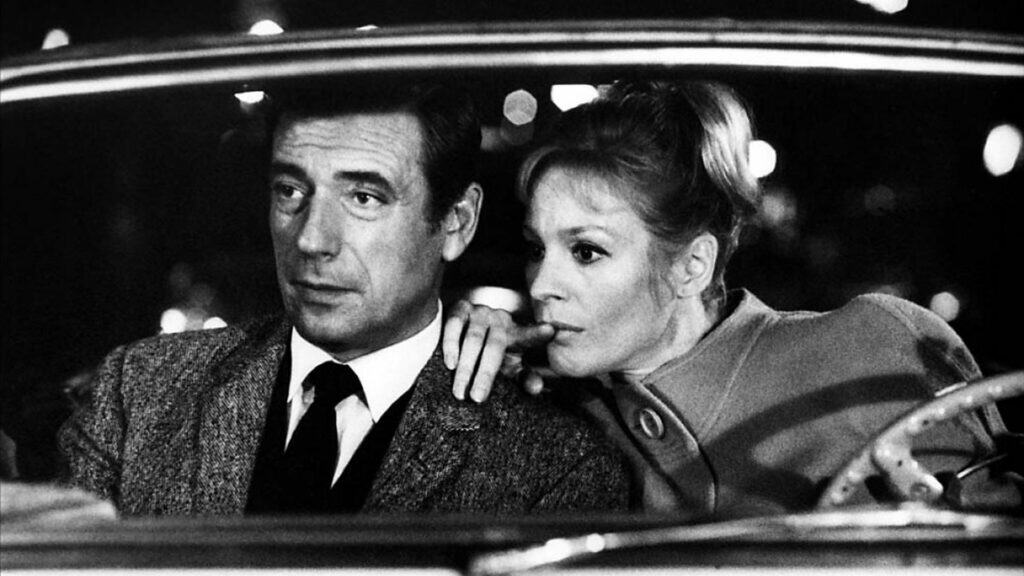
Montand plays Diego, a Spanish communist and veteran of the Spanish Civil War, who lives in exile in France and works as a covert operative for the underground Spanish Communist Party. Diego travels between France and Spain under false identities to organise revolutionary activities against Franco’s regime. In Paris, he embarks on a romantic relationship with Nadine (Geneviève Bujold), a young student, while maintaining a connection with his longtime partner, Marianne (Ingrid Thulin). The latter is a book editor and is dying for a stable relationship with Diego. Through Nadine, he comes into contact with a gang of young revolutionaries whose radical tactics differ from his own. La guerre est finie aims to juxtapose the personal and the political.
La guerre est finie
As the fourth entry in my series examining Alain Resnais’s filmography, this one was the most difficult to sink my teeth into. I saw the film for the first time relatively late, in 1986. Encountering La Guerre est finie, which was his weakest film at the time, was a weird experience. The film reveals core weaknesses right away, beginning with Giovanny Fusco’s credit music containing a male choir. Jorge Semprún’s screenplay is simplistic by Resnais’s standards. The writing stays blatantly political, hammering ideological conflicts and revolutionary disillusionment with a heavy hand. Complex themes of exile and commitment shrink into predictable generational clashes and on-the-nose dialogue. The result lacks the poetic ambiguity and formal daring found in Resnais’s earlier collaborations.
Resnais simplifies his direction in ways that disappoint when set against the genius of Hiroshima mon amour, Last Year at Marienbad, and Muriel. Radical temporal fragmentation and innovative narrative structures largely disappear. In their place appears a surprisingly straightforward approach that borders on the conventional. Even his attempts at innovation, the fleeting flashes of rapid images showing people or events before Diego fully encounters them, register as clumsy and half-hearted. These elements graft onto an otherwise standard political drama, rather than extending his previous formal brilliance. The film never reaches the haunting density and intellectual force of its predecessors. Scenes unfold with a linearity that feels reductive rather than refined.
Fifty Shades of Grey
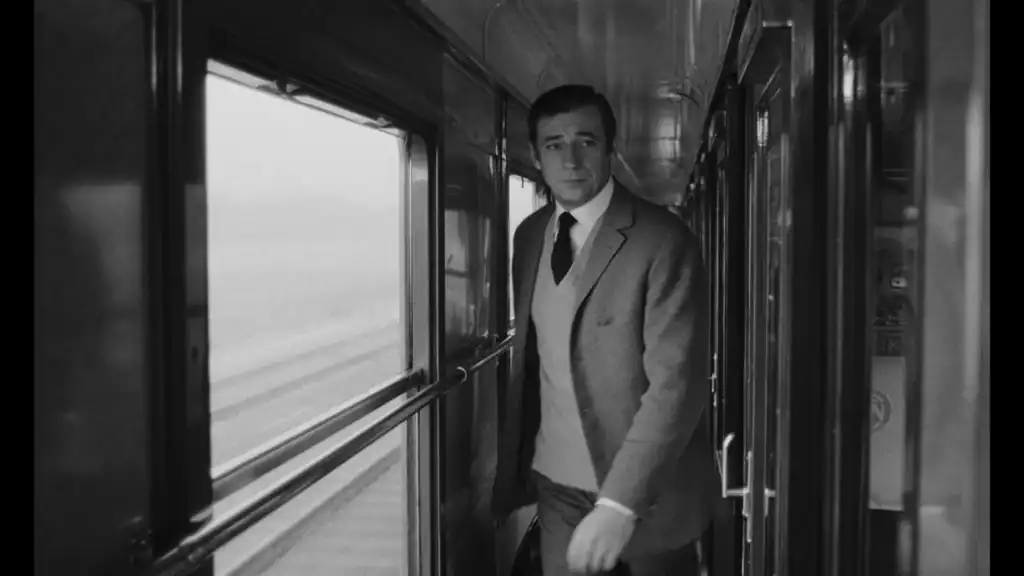
Even Sacha Vierny’s cinematography, a reliable strength in Resnais’s earlier films, appears less intriguing here. The visual palette leans heavily on muted greys and functional compositions that serve the plot without adding layers of meaning. Tracking shots and zooms lack the hypnotic precision or spatial distortion that elevated previous works. The whole affair comes off as competent but unmemorable. The camera work supports the story adequately yet fails to evoke the depth or atmospheric tension present in the director’s prior masterpieces. The music amplifies these issues. Hiroshima mon amour composer, Giovanni Fusco, supplies a score that remains lacklustre overall. Passages featuring a male choir aim for solemnity or revolutionary weight but deliver neither.
An artistic failure becomes an American success
Further problems arise in handling personal relationships. Diego’s connections with Marianne and Nadine stay underdeveloped and distant. Emotional scenes prioritise exposition or ideological contrast over genuine intimacy. The romantic and domestic threads feel secondary and unconvincing. This weakens the intended balance between personal lives and political action. Montand brings presence to the lead role, yet even his solid performance cannot compensate for the surrounding vapidity.
The film’s surprising commercial success in the United States only underscores these shortcomings. The limitations, including Semprún’s overt politicking and Resnais’s restrained style, evidently resonated with American audiences in the mid1960s. Something similar would happen with a later Resnais film. The absence of the demanding modernism of Resnais’s earlier triumphs was not a problem for them. What registers as watered-down experimentation elsewhere apparently struck viewers stateside as profound political cinema. The combination of recognisable stars, straightforward plotting, and surface-level political themes likely contributed to its appeal in that market. Semprún’s script was even nominated for an Oscar.
In the end, La Guerre est finie stands as a regrettable step backwards in Resnais’s body of work. The star power can not conceal how the personal-political blend, hampered by a lesser script and restrained direction, fails to ignite either emotionally or, especially, intellectually. For someone who considers Resnais a favourite director, this entry in his canon is even more disappointing. The film offers occasional moments of competence yet never approaches the heights of the director’s earlier works. The director’s next film would also include choir music, but in a distinctly different vein. Almost everything else would turn out to be different as well.