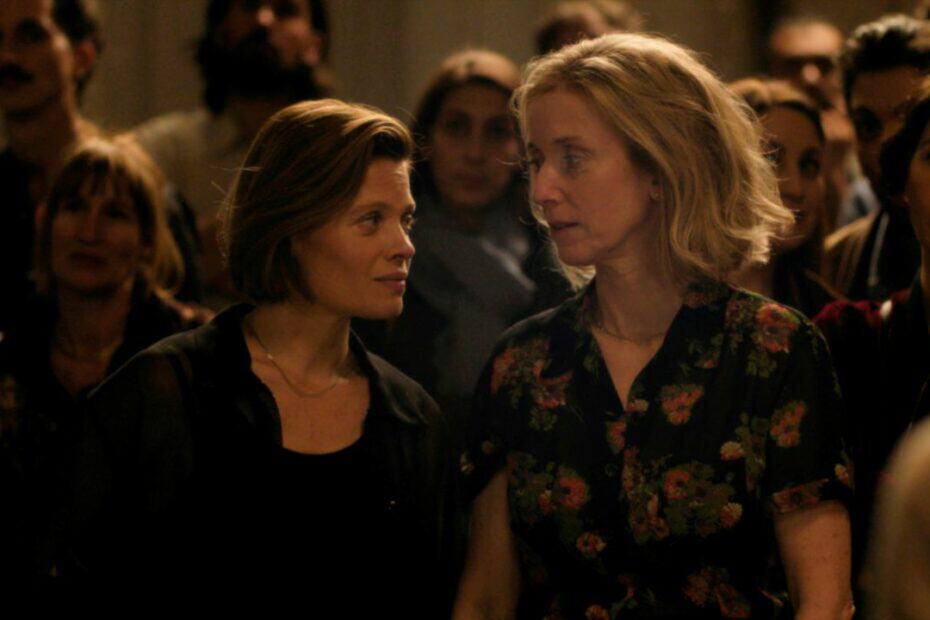
La vie d’une femme (A Woman’s Life) is the sophomore feature by Charline Bourgois-Tacquet. The director presented her first feature, Les Amours d’Anaïs, at Semaine de la Critique in 2021. It was mildly amusing, aided by the star power of Valerica Bruni-Tedeschi, with a gay theme clumsily thrown in. It was a surprise to see her new work selected in the competition, but maybe it would turn out to be another example of a director taking a giant leap from her debut, like Mascha Schilinski with Sound of Falling (In die Sonne schauen) last year. Unfortunately, that wasn’t the case. Instead, the film is abysmal throughout the bloated runtime. This is another indicator of the crisis in French cinema.
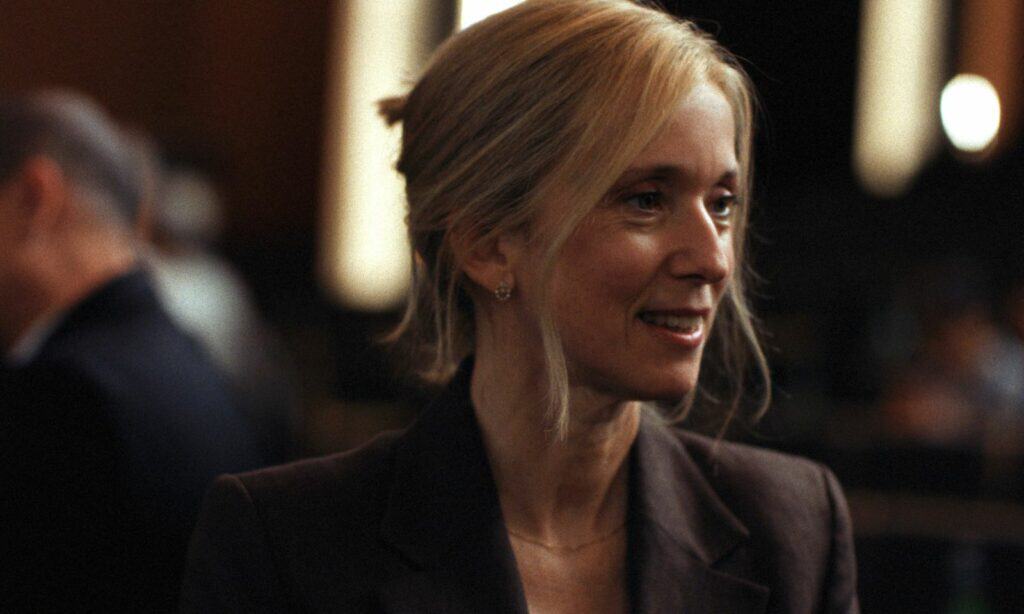
I guess some plot points are still in order. The premise is described as “Gabrielle is a middle-aged childless surgeon whose life is consumed by her work. When a writer observes her at work for a novel, her life begins to change.” Does the film touch on the grave weaknesses in French healthcare, of course. Is the writer who shadows Gabrielle a reasonably attractive woman, which will make the film succumb to the same trap as the debut? You bet! Is the whole affair superficial enough to make you wonder how it got financed? Even more obvious. Gabrielle is played by Léa Drucker, a fine actress who seems caught in a loop of bad films.
La vie d’une femme, et la mort du cinéma français
Last year, it was Dominik Moll’s Dossier 137, and there has been a string of weak films before that. Here, the main culprit is a script that recklessly delivers a bunch of clichéd themes with no idea what to do with them. For instance, Marie-Christine Barrault plays Gabrielle’s mother, who suffers from Alzheimer’s disease, for some reason. Not a single overdone idea is overlooked in La vie d’une femme. The director is Emmanuel Carrère’s partner, but she doesn’t seem to have learned much about scriptwriting from him. I was surprised to learn that the film runs merely 98 minutes, since it felt longer than Sátántangó, but with dull lensing.
During the opening press conference with Thierry Frémaux, several questions focused on politics, including some from individuals who felt there were too few female directors at the Cannes Film Festival. My guess is that gender was the main reason for the film’s inclusion, and it serves as a stern warning about what happens when artworks are selected for the wrong reasons. There is no reason whatsoever to waste time and money on this mess.