Jerzy Skolimowski’s 1982 masterwork returns to Cannes forty-four years on, and it has lost none of its bite. ★★★★★
Forty-four years on from its first Cannes competition screening, Jerzy Skolimowski’s Moonlighting arrives in Cannes Classics not as a museum piece but as a corrective. The 4K restoration, supervised by cinematographer Tony Pierce-Roberts, presented by mk2 Films and Goldcrest Films International, reveals a film that has been quietly right about everything for decades: about labour, power, information as an instrument of control, and the strange moral vertigo of the exile who must lie to survive. It is one of the great British films, made by a Pole who knew better than to sentimentalise what he was observing.
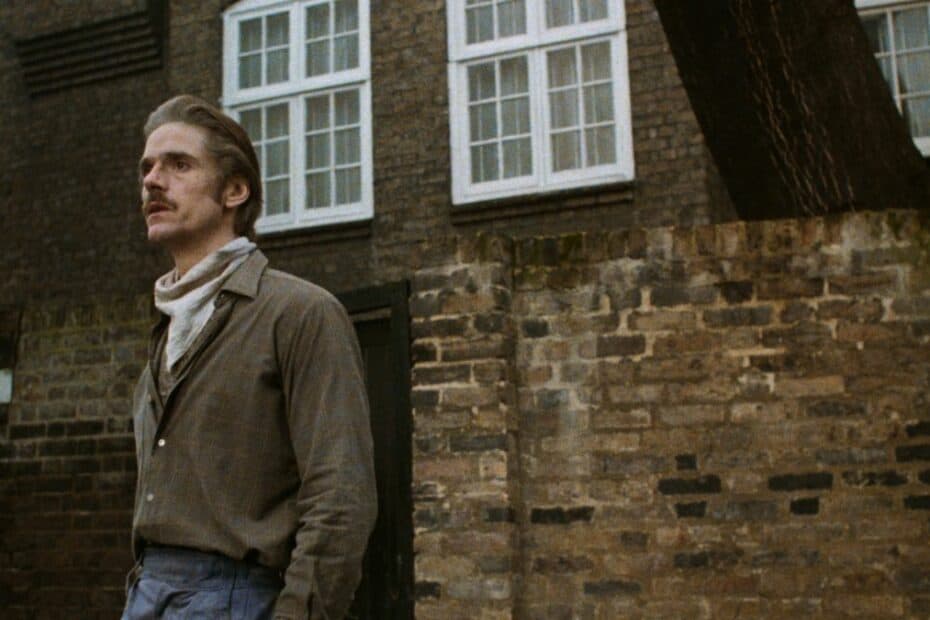
The premise is clean and deliberately mechanical. Four Polish workers arrive in London on tourist visas in December 1981 to renovate a Kensington townhouse for their wealthy boss back in Warsaw. Only Nowak (Jeremy Irons), the foreman, speaks English. When martial law is declared in Poland, Nowak decides (instantly, privately, without agonising) not to tell the others. The film then becomes an account of how one man sustains a fiction, and at what cost to everyone it touches.
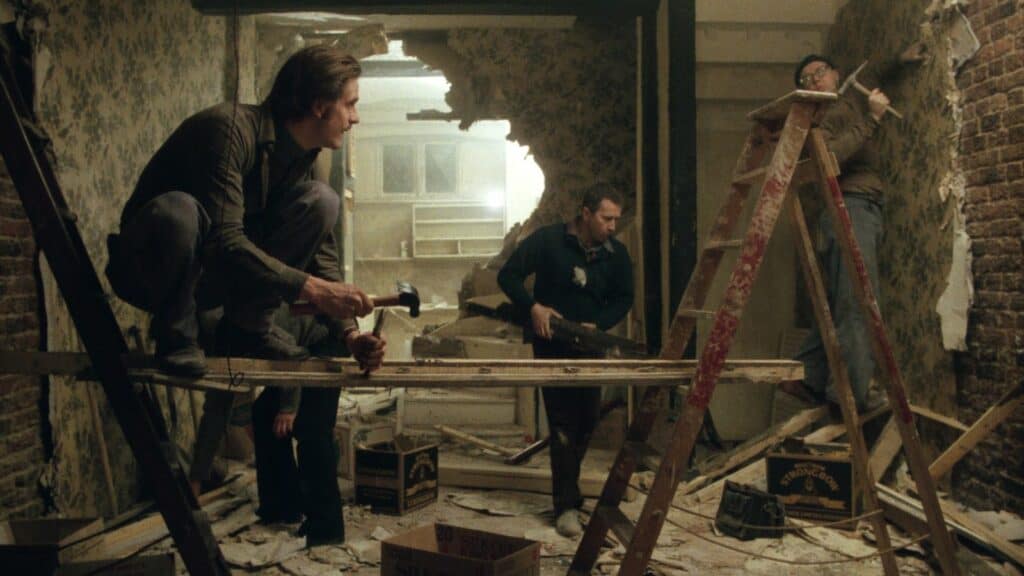
Skolimowski wrote the screenplay and directed, and the two activities are inseparable here: the script’s formal compression, its refusal of subplot, digression, or any tiresome psychological elaboration, is in itself a directorial position. It debuted at Cannes within six months of martial law being declared, and you feel that urgency, without the film coming off as too rough around the edges. Nothing in the film is there that doesn’t need to be. This is what aesthetic economy looks like when it’s driven by something other than budget.
Jeremy Irons’ performance is the film’s engine and its moral problem. Nowak narrates in flat, accented English, observational, almost clerical, and Irons plays him as a man whose competence has become indistinguishable from ruthlessness. He is genuinely gifted at managing people, stretching resources, improvising under pressure; he is also a liar, a thief, and a man who has decided that his authority entitles him to decide what others may know about their own lives. The film does not condemn this. It does not, crucially, excuse it either. It simply watches. Each theft is staged with a precision that recalls Bresson without any of his theological cargo. Skolimowski is interested in the practical, not the redemptive.
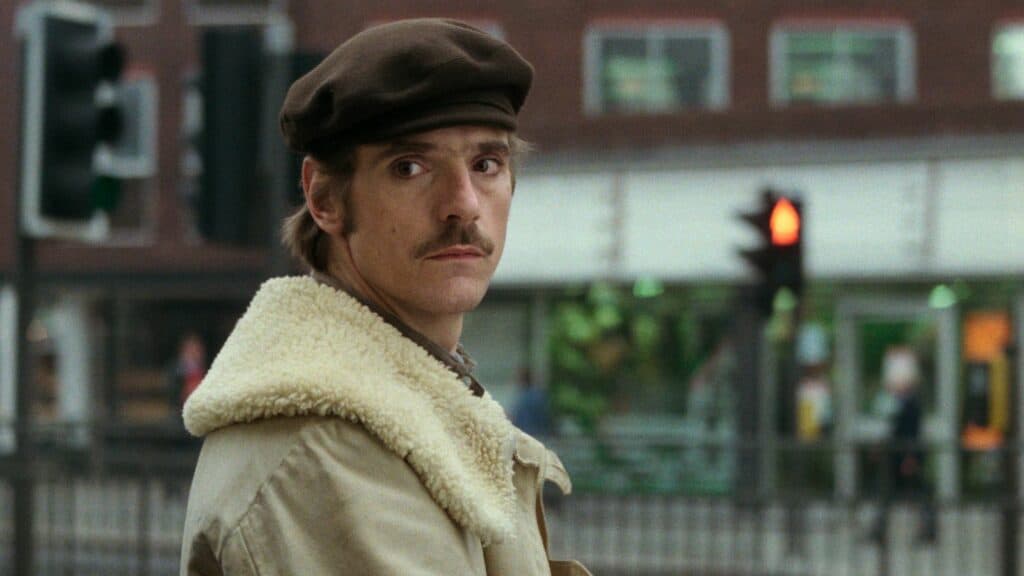
What makes the film politically acute, and not merely politically themed, is that its allegory operates in multiple directions simultaneously. Nowak is the petty autocrat suppressing information to maintain order. Still, he is also the working man, exploited by the unseen boss who has sent four men to London on a shoestring. He controls; he is controlled. The martial law imposed on Poland is mirrored not only by Nowak’s deception but by the more banal coercions of London at the time: the hostile shop assistants, the immigration paranoia, the grinding impossibility of getting anything done when you are foreign, broke, and undocumented. Pierce-Roberts’s images of the city, cold, flat, and unglamorous, makes it an indifferent adversary.
The practise of Moonlighting
The restoration holds up to scrutiny. Pierce-Roberts’ images retain their muted palette and their deliberately unshowy compositional logic; there is no digital over-sharpening, no pumped contrast. The grain is present and appropriate. It is exactly what a restoration should look like: the film as it was, made visible again. At Cannes 2026, Skolimowski attended the screening alongside his wife Ewa Piaskowska, an occasion that carried its own quiet significance. The director is now in his late eighties. Before the screening, he told a hilarious anecdote about fighting the draconian British labour laws. The situation was saved by Jeremy Irons’ last-minute ingenuity, and the director could happily give the union representative the finger once the scene was shot.
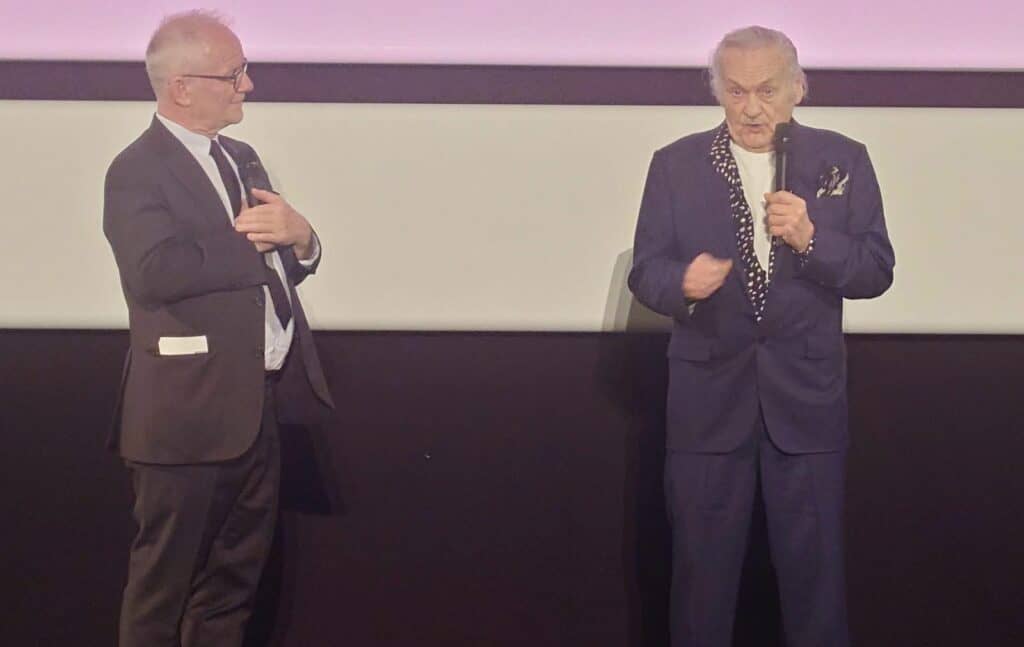
Something is fitting about Moonlighting being the film returned to the festival’s attention: not the surrealism of The Shout, not the late-career valediction of EO, but this one, the work made in the fastest, most pressured circumstances, the one that asked the plainest question and refused the plainest answer. What do you owe the people in your care? The film does not know. Neither, finally, does Nowak. That is one of the reasons it’s a timeless classic, and it was much stronger than I remembered.
Cannes Classics 2026. 4K restoration presented by mk2 Films and Goldcrest Films International, supervised by Tony Pierce-Roberts. Screened in the presence of Jerzy Skolimowski and Ewa Piaskowska.