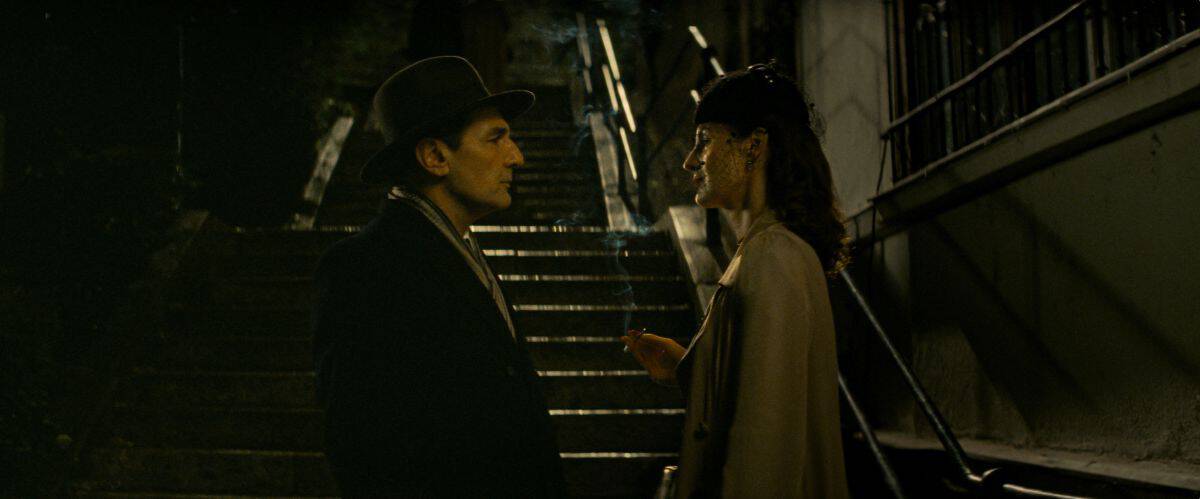
Jorge Thielen Armand’s third feature, Death Has No Master, is the finest thing in the 2026 Quinzaine des Cinéastes, a film of rare sensory precision that earns its violence rather than merely staging it. ★★★★☆
In 2018, a Swedish film called The Real Estate (Toppen av ingenting) competed at the Berlinale. The engine of the story is a woman who travels to Stockholm following a relative’s death to claim an inheritance, only to find the situation on the ground considerably more complicated and dangerous than she had anticipated. Death Has No Master follows something close to the same structural logic, transplanted to a Venezuelan cacao plantation and stripped of any trace of Nordic deadpan. The comparison is flattering for both films, even if they are distinctly different. It also illustrates how a premise that sounds schematic on paper can sustain radically different registers depending on what a filmmaker does with the physical environment around it.
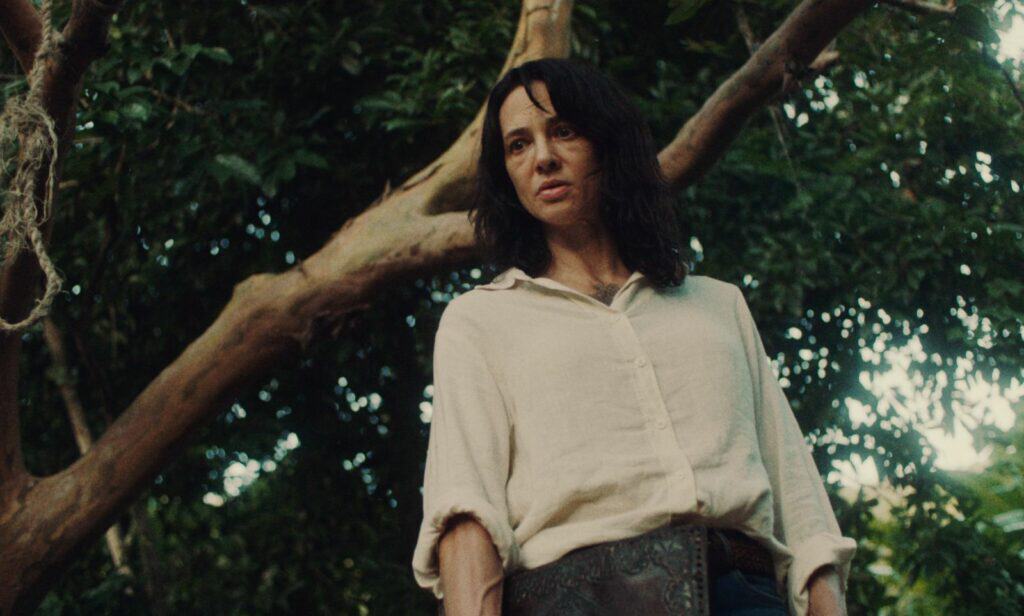
Death Has No Master
What Thielen Armand does with Venezuela is the film. His first two features, La Soledad (2016) and La Fortaleza (2020), were already deeply embedded in the Venezuelan landscape and family history; La Fortaleza, in particular, with its Herzogian descent into the jungle and alcoholism, established him as a director for whom location is not merely a backdrop but an argument in itself. Death Has No Master extends that logic into genre territory. The plantation the heiress Caro arrives to claim is occupied by the former workers, and the question of who owns what, who has the right to what, and what violence lurks beneath the surface of that dispute is never resolved by the film so much as detonated.
The cinematography is by Luis Armando Arteaga, whose mention here is not incidental. At the very same 2018 Berlinale where The Real Estate competed, he lensed Marcelo Martinessi’s Las Herederas, which won two Silver Bears. Here, the colours of the Venezuelan coast and interior are rendered with an exquisite density: greens that feel almost pressurised, skin against heat, the plantation’s crumbling colonial architecture caught in light that makes it look simultaneously beautiful and actively threatening. Arteaga and Thielen Armand block for meaning rather than atmosphere: every composition tells you something about power, proximity, and territory.
To quote the director, “The non-realistic elements are at the heart of the film. In them reside the reasons
behind its character, her pain, fear… they are a key to the film. Dreams contain our purest desires, but are we responsible for them? Do we control them? Do they influence what we do in real life? Can they suddenly find themselves in our flesh and possess us?”
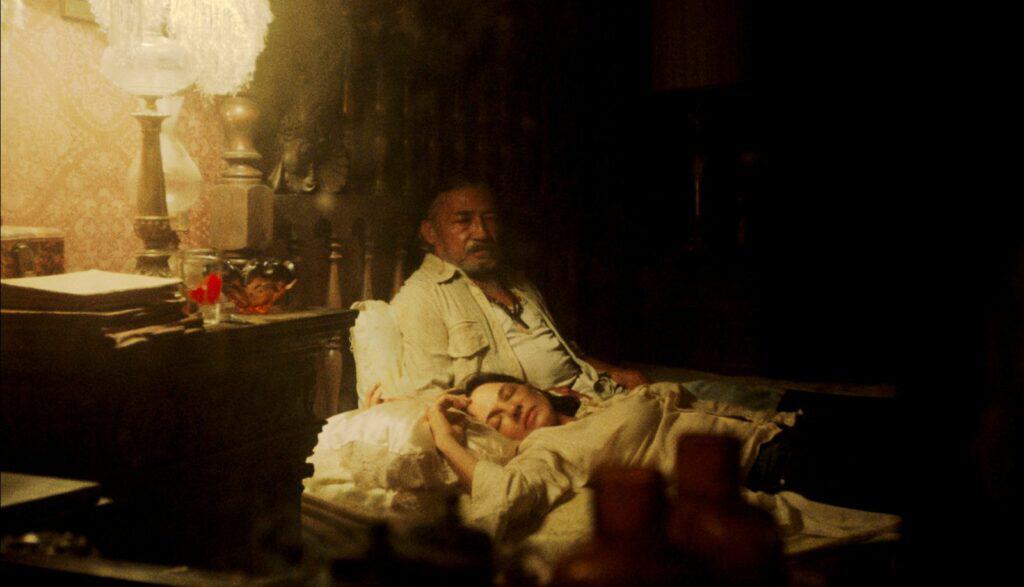
The sound work is equally interesting. The score is hypnotic without being insistent, the kind of accompaniment that settles into the nervous system before you notice it working. The diegetic sound carries equal weight: the jungle presses in at the edges of every scene, neither decorative nor melodramatic, simply present. Running beneath it all is a family magnetic tape from the 1970s, digitised and threaded through the film (strange sounds, voices, instruments), creating a layer of interference that is never quite explained. Is it memory, hallucination, or the house itself? Thielen Armand leaves the question open, which is precisely the point.
Asia Argento plays Caro, and the casting is not without its ironies: Argento, daughter of Dario, is not unfamiliar with violent inheritance as a cinematic concept. Her performance is controlled and occasionally opaque, which suits the film’s reluctance to explain itself. The real discovery, though, is Dogreika Tovar, a non-professional making her screen debut, whose stillness Argento herself described as a risk: the fear that such unguarded naturalism would throw a trained actress’s register into relief. It doesn’t. The dynamic between the two women is where the colonial subtext becomes fully legible, and where Caro’s role as, in Argento’s own phrase, a conquistadoress comes into focus.
Thielen Armand has said that the only precursor he could identify for the film was Jerzy Skolimowski’s The Shout (1978), which is an odd yet precise reference. The Shout is not really about its plot either; it is about dread as a physical property of landscape, about the way certain spaces carry a violence that precedes whoever happens to be standing in them. That quality is exactly what Death Has No Master achieves at its best. As it happens, Skolimowski was at Cannes this year with Moonlighting in Cannes Classics. The conversation between the two films, separated by nearly five decades and an ocean, was not one anyone had planned, but it was still there.