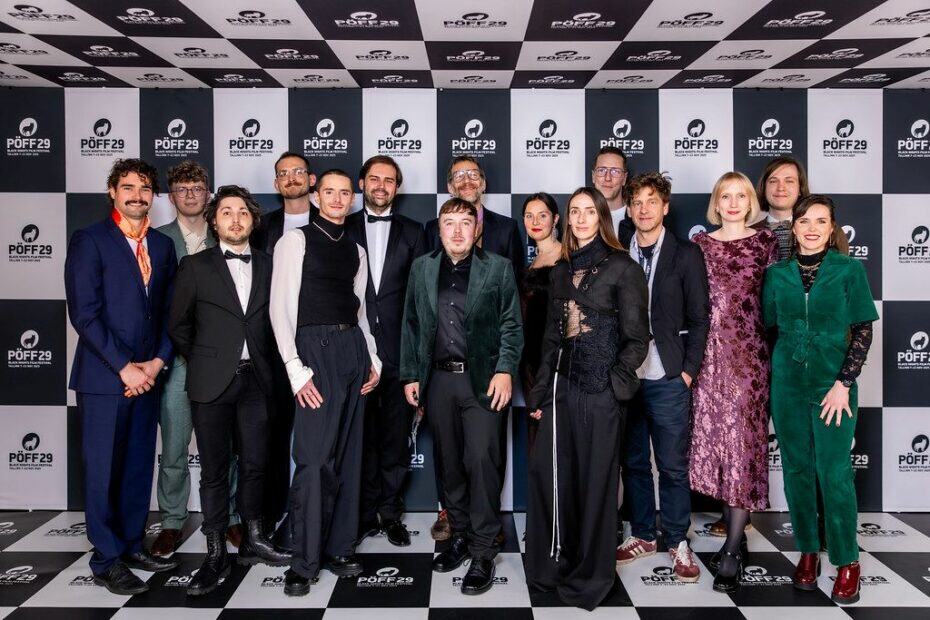
Pascal Schuh’s Interior was among the highlights of this year’s Black Nights Film Festival. I had the opportunity to talk to the director, as well as the producer, and co-author, Timo Ackermann, about the film. Interior is reviewed here.
The Disapproving Swede: You were here last year with the project in the Work-in-Progress section. Can you tell me about the gestation period and how this film came to be?
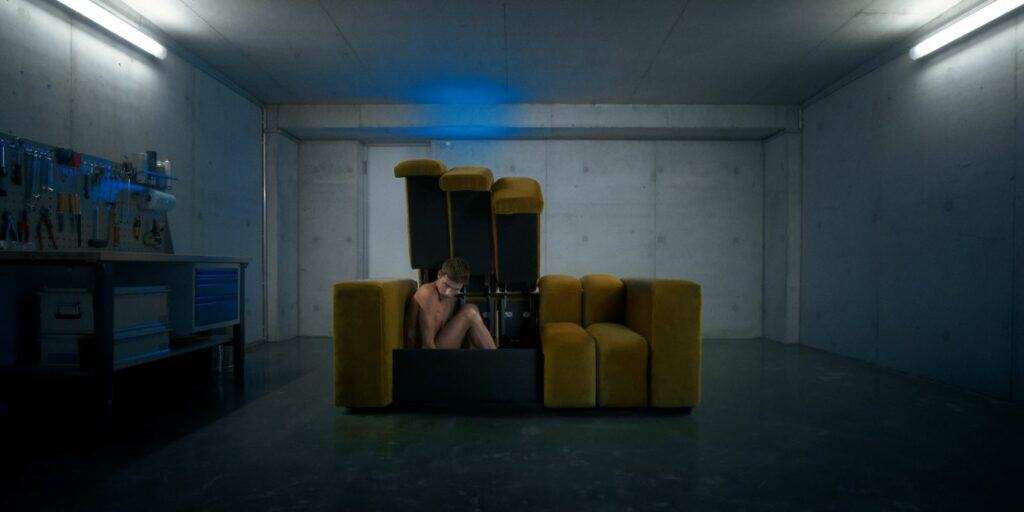
Pascal Schuh: Actually, it started as a short film. Then we tried to make it into a series pilot, but eventually we decided to make a feature film instead. We were really interested in these true-based events of the sofa or couch.
TDS: This is a true story?
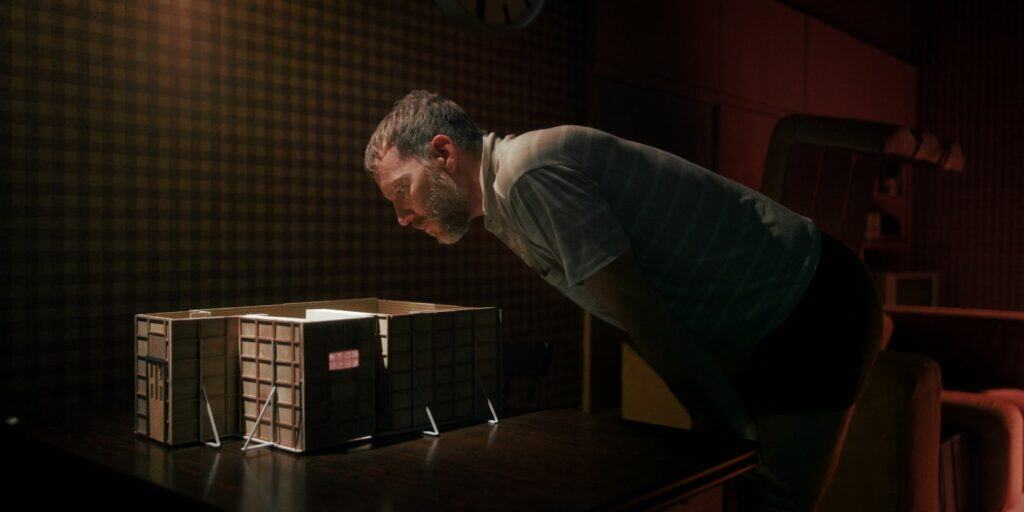
PS: Yes, in the 1970s, some burglars in Germany delivered hollow couches to different homes, then removed all the expensive items from them. At my school, a teacher had her house broken into, and she was very emotional about it. From there came the idea that maybe it is not about stealing things, but private filmed moments. It developed from there.
TDS: Did it take a long time to write the script?
PS: It’s our graduation film, so we only had one year to try to fund it, and then we had to deliver a new stage of the script every two months.
TDS: So, there was never a short to begin with, even though it was a graduation project?
Timo Ackermann: Just today, I learned that it’s pretty unique for German film schools that there is an opportunity to graduate with a feature film. Internationally, that is more unusual. Pascal and I started studying at the same time, and quite early, he told me about this couch idea.
TDS: The relationship between Lieberman and Kasimir is very interesting. Can you talk a bit about that?
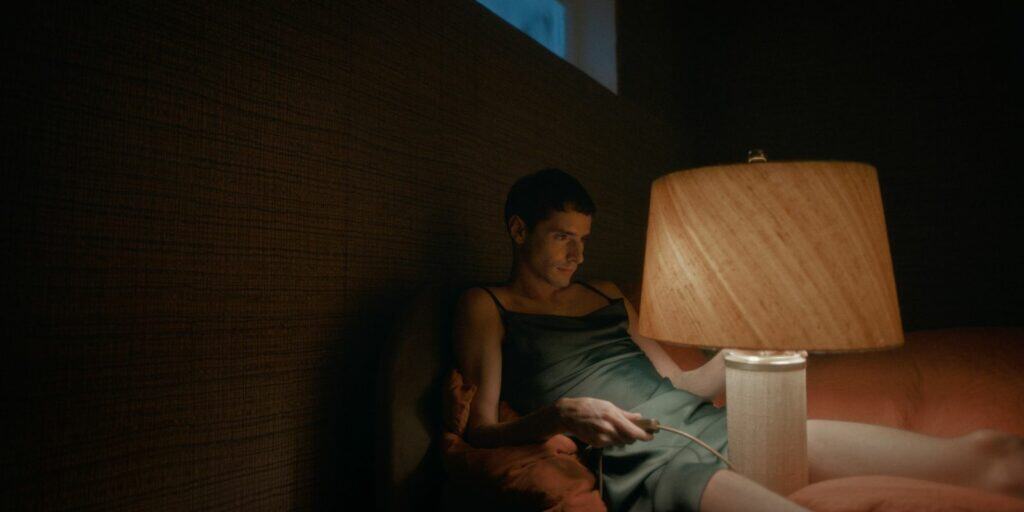
PS: It comes from real life in a way. How difficult it is to find love in a city like Berlin. Lieberman’s love is very abusive, and he doesn’t show it at all, but there is this young guy who wants it anyway. In films like Titanic, we see perfect love, but reality is not like that, not least for older gay men. It’s not a healthy love they have in the film, but it is something. It was really nice to work with two queer actors because they captured some nuances in the relationship.
TDS: How do you see Kasimir? Do you see him primarily as a victim, or is that a simplification?
PS: Well, he does cruel things too…
TDS: Absolutely.
TA: I think this movie is also about what living in this society makes us do or prevents us from doing. Kasimir witnesses lots of bad stuff, but he is not allowed to intervene. In the film, it is Lieberman telling him not to do so, but I see the same things in real life. If you get on public transport in Berlin for, like, two hours, you will see absolute madness, and people in Berlin are really good at not doing anything about it. The question is what makes us lose the connection to other people like that. I don’t have an answer.
PS: Regarding Kasimir, I think he wants to be seen by someone, especially Lieberman, and he only
tries to achieve it by doing his work as well as he can. Eventually, his own morality comes into play.
TDS: I’m interested in this scientific part. It feels almost ritualistic. Still, the most ritual sequences of them all might be the meals with those three fish sticks. Can you talk a bit about where that idea came from?
PS: I’m inspired by Korean films. Bong Joon-Ho, for instance.
TDS: Maybe. Park Chan-Wook as well?
PS: Yes, Oldboy for sure. I really like these montages and this rhythm because I think they give the audience time to think about the film in a relaxed way. The cooking scene itself may be dull, but they strive to make the best possible meal every day. They make a catalogue to see whether something is different. These habits also characterise their life and world. I think it is also inspired by Woyzeck, the way of eating the exact same thing every day. But also, the way I work on the film is a bit the same. Every day is somewhat the same, but I try to give 100 % every day, [as does the rest of the team].
TDS: So it mirrors each other in a way? The way you spend time on the film and they spend time on their meals mirror each other.
Yes, I think so. Hopefully, I managed to give 100 % each day.
TDS: The music is striking in the film. Who was the composer?
PS: We prepared 20 minutes of music together with the composer, Erik Johann Fodi. It was great teamwork. We used the music during the shooting to get the actors in the mood. The scene with the saxophone player was done live. I managed to find a guy who was both an actor and a saxophone player. Funny enough, his name is Andreas Nickel, and his character’s name is Zinc.
Pascal Schuh about the technical aspects of Interior
TDS: Let’s talk about the cinematography by Greta Isabella Conte.
PS: She’s very talented, and we met in film school as well. We put a lot of effort into how those camera systems work.
TDS: Which cameras did you use?
PS: Sony sponsored a lot. We had a really expensive camera, and had to use lots of filters to make the CCTV material look bad. It’s very important to have a CCTV atmosphere, with the old lady in the elevator, because we think it’s happening right now, and it enhances the voyeuristic feeling.
TDS: Do you have any stylistic role models, any directors you like that you think are similar or inspired the look of the film?
PS: I think the most important ones were The Skin I Live In, Under the Skin, and the Korean films I mentioned.
TDS: Thematically, I was thinking about Peeping Tom
PS: I think I saw Peeping Tom one year after the shooting. I was surprised and thought, “Why haven’t I seen this before?” My mentor said that I should see it, and he was right.
TA: We also saw One-Hour Photo together.
TDS: Did it take a long time to do the blocking? I think it’s really well done.
PS: Some parts were storyboarded, but for others, we didn’t have time, so we had to decide on the set.
TDS: Is the film as you hoped it would be, and are you happy with the result?
PS: What I really learned making this film is to trust the team. The creativity of everyone involved made this film even more special, so it’s difficult to say whether it is as I imagined it. I would rather say that it got bigger than I actually thought it could ever be.
TDS: It’s nice to hear you emphasise the film’s collective aspect. I’ve noticed that it’s become more common for directors to talk about “our film” rather than “my film”.
TA: For me, it’s obvious that films are always a team effort, and it’s not just the actors or just the director doing the movie. This is often overlooked in media coverage. I think it is vital always to say, “We did this.” Three hundred people worked on this movie, and everybody is important.